Danish Women Features: Facial Features, Appearance and Personality
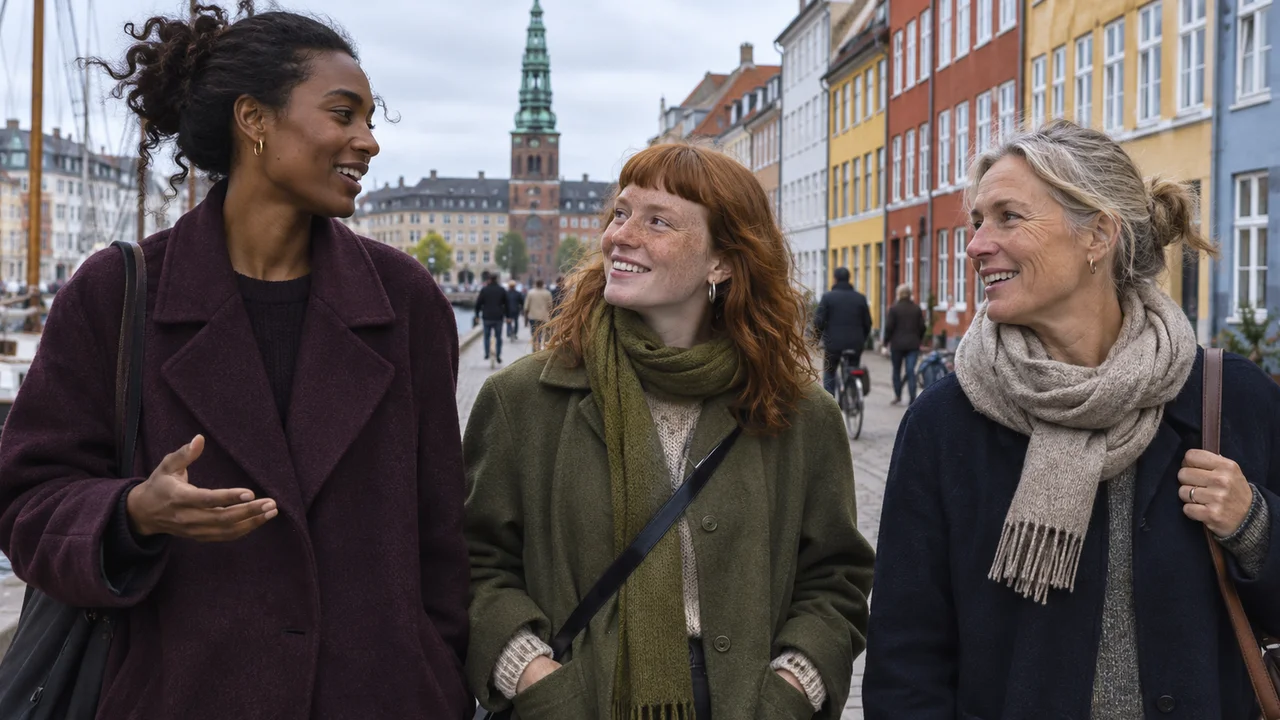
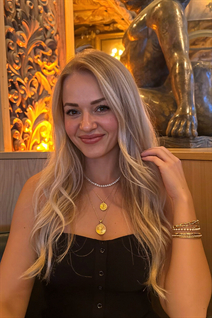
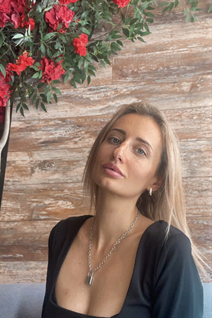
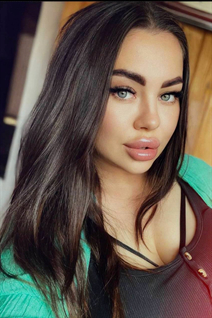
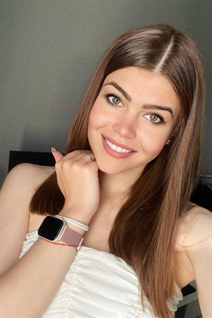
What do Danish women look like? Blonde and light-brown hair, fair skin and blue, grey or green eyes are familiar in Denmark, but there is no universal Danish face. Women in Denmark also have dark or red hair, brown eyes and a wide range of skin tones, face shapes and builds. These features vary just as much in how they combine as in how they look individually.
Denmark has about six million residents, according to Statistics Denmark's population figures. Copenhagen is home to people with family ties to many countries, and a portrait of someone in the capital cannot stand for Jutland, the islands or even the rest of her street. This guide separates observable features from style choices and cultural habits. For the regional context, see Scandinavian women features.
Danish Women Features at a Glance
| Feature | What You May Notice | What to Keep in Mind |
|---|---|---|
| Hair | Light blonde and light brown are familiar, alongside auburn, dark brown and black. | Colour is not the same as texture, and both styling and dye can change the impression. |
| Eyes | Blue, grey and green are familiar; brown and hazel are also seen. | Light and clothing can bring out different tones in the same eyes. |
| Skin | Fair skin, sometimes with freckles, is a familiar look. | Denmark includes a wide range of skin tones. Fair skin is not an identity marker. |
| Height | About 167.2 cm at age 18 for the 1996 Danish female birth cohort, in NCD-RisC's adult height study. | A cohort average does not tell you how tall any particular woman is. |
| Build | Slender, broad, curvy and muscular builds are all part of the picture. | A transport habit such as cycling does not produce one national body type. |
| Style | Functional layers, relaxed tailoring and understated pieces are visible in everyday wardrobes. | Colour, pattern and statement make-up are not exceptions to being Danish. |
The height figure comes from a defined dataset. The other rows describe examples, not measured frequencies. There is no basis here for putting the listed eye colours or face shapes in order, or for saying how many women share any combination. Treat the table as an introduction to the range, not as a way to identify someone.
Danish Facial Features: What Is a Typical Danish Face?
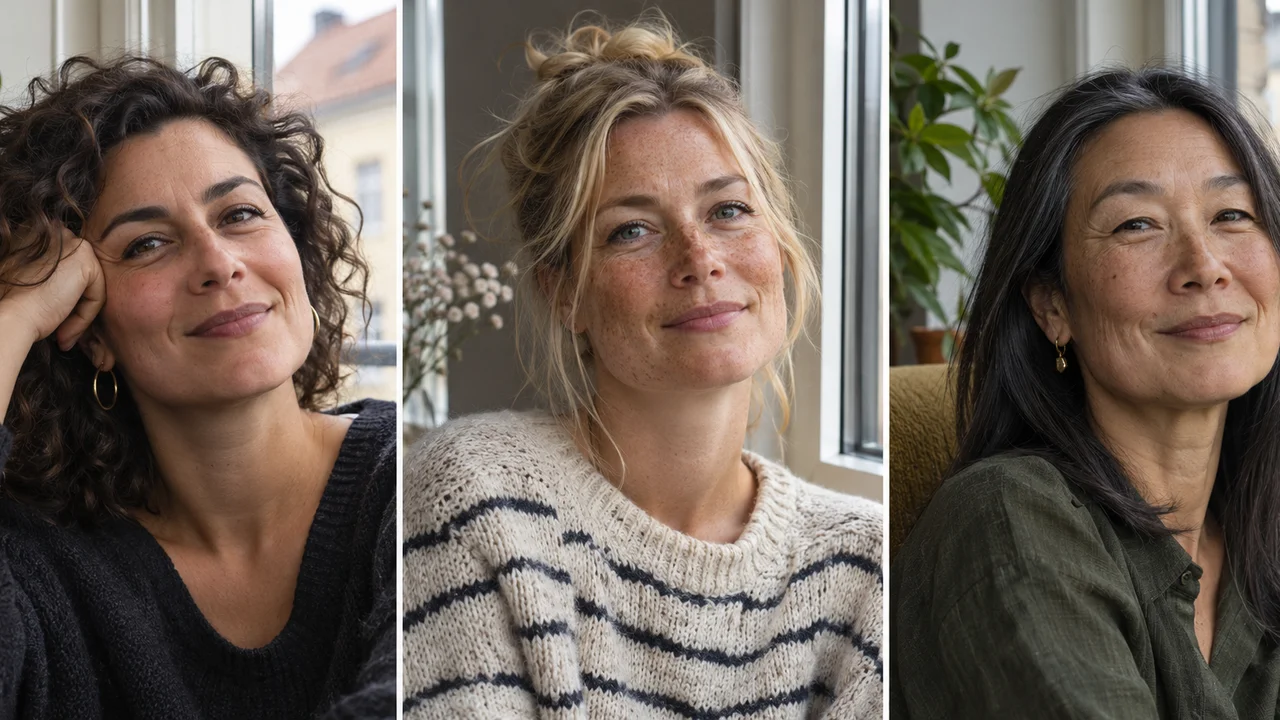
When people picture an average Danish woman's face, they may imagine fair colouring, visible cheekbones and an oval outline. Those features can occur together, but they also occur separately and well beyond Denmark. An illustrated example can show what a description means; it cannot prove that the description represents the population.
Face Shape and Cheekbones
Oval, round and more angular faces are all possible. Someone with prominent cheekbones may have a soft jawline; someone with a rounder face may have a more defined chin. The nose does not have to follow either outline. If you want to describe a portrait accurately, name the feature you see rather than calling the entire face Nordic. Even two people in the same family may have entirely different proportions.
Facial structure is also not the whole impression. Light from the side can make cheekbones look sharper, while soft light from the front makes contours less obvious. A winter hat hides part of the outline; a close phone portrait can make the nose seem more prominent. None of that tells you where the person is from.
Eyes, Brows and Colouring
Grey-blue, green and blue eyes are among the shades associated with Danish looks. Hazel and brown are just as much part of the range. There is no set pairing with eyebrows: a blonde woman can have relatively dark brows, and light brows can be difficult to see in strong light. Skin may be very fair, olive, brown or deep in tone, with or without freckles. The contrast between skin, hair and eyes is often what people notice first, rather than the colour of any single feature.
Hair Colour and Texture
Light blonde, dark blonde and ash brown can be hard to distinguish across photographs. The same hair may appear cooler indoors and warmer in sun; childhood blonde can darken with age. Natural grey or white hair may sit beside darker strands. Danish women also have copper, brown and black hair, whether straight, wavy, curly or coily. A neat bun, a short cut or loose curls tells you more about somebody's styling choices that day than about how her family came to live in Denmark.
In a statistical sense, typical would refer to frequency in a defined group, and you would need representative measurements to make that claim. In everyday descriptions it often means no more than familiar. Appearance cannot establish a person's nationality.
Height and Body Type
NCD-RisC's adult height study estimated a mean of about 167.2 cm at age 18 for women in Denmark born in 1996. You can see Denmark's 1996 estimate in the study data. The estimate describes one birth cohort. It does not combine every age living in Denmark today, and the study estimates averages rather than prescribing a height range. Quoting the figure with its year and age is more informative than simply saying Danish women are tall.
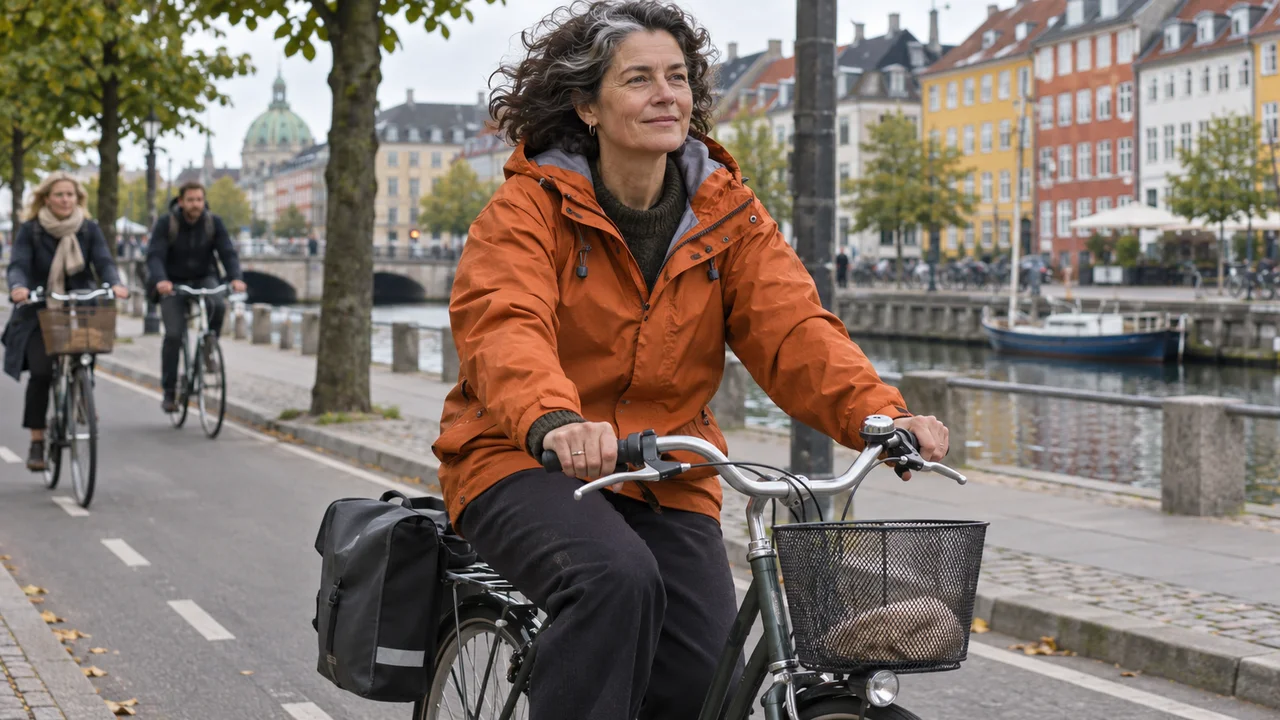
Cycling is a visible part of daily life, especially in Copenhagen, but a bike is often just a way to get to work, pick up groceries or take children somewhere. A rider in everyday clothes is not necessarily training for anything. People also differ in how much they walk, what work they do, and what exercise, if any, they enjoy. You will encounter different builds in the same city, on the same street and in the same family.
Where Danish Looks Come From
Denmark sits between the rest of Scandinavia and continental northern Europe. Its long connections with Sweden, Norway and northern Germany help explain why features associated with Denmark are also familiar across neighbouring places. Historic roots and movement across borders are context, not evidence of a distinct set of features that only Danes inherit. If two women resemble each other, that resemblance need not tell you whether they share a recent family history.
Jutland, the Danish islands and Copenhagen have distinct local histories, including different connections through work, education and trade. That makes them useful places to talk about community and migration. It does not make them categories of jawline, height or eye colour. A woman can have family from one part of Denmark, grow up in another and develop her style somewhere else entirely.
On 1 January 2026, Statistics Denmark's register-based figures classified 16.8% of residents as immigrants or descendants of immigrants. That is an administrative measure based on birthplace and parental information, not a count of what people look like or how they identify. It covers the whole population, rather than women only, and does not capture the full variety of family histories in Denmark.
Danish Beauty Standards and Natural Style
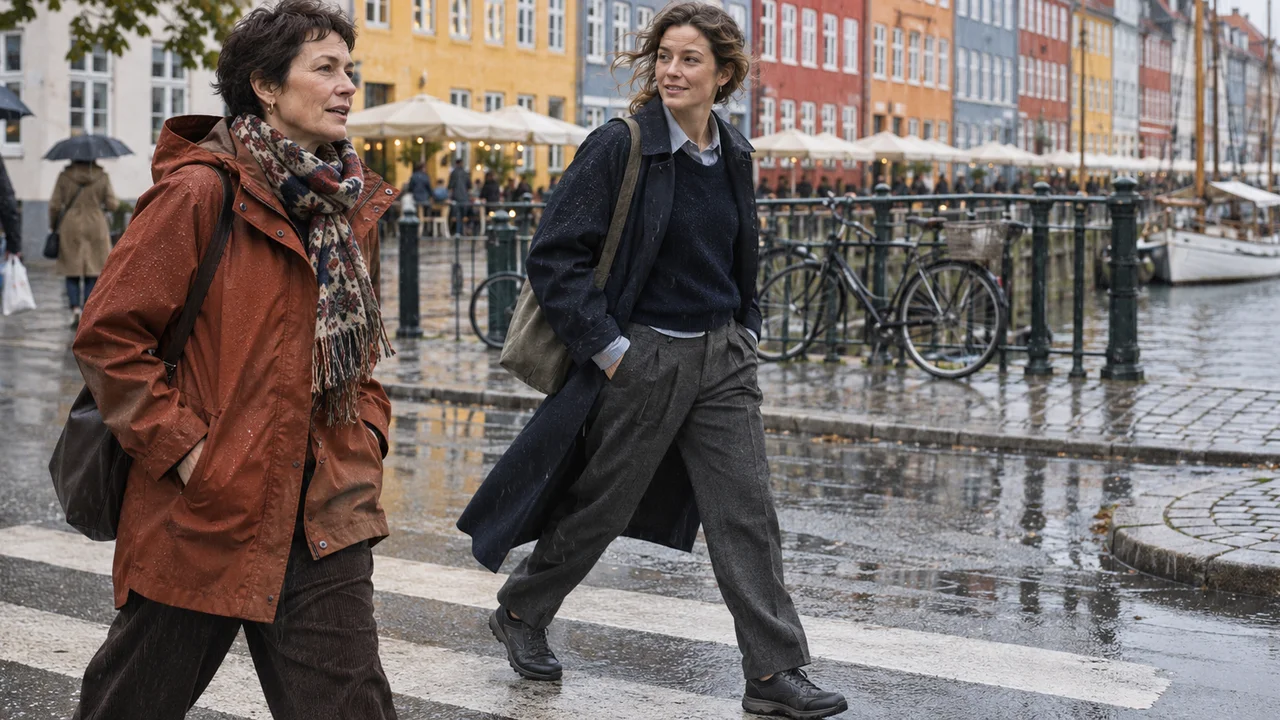
An understated beauty look might mean a light base, natural-looking brows and make-up that does not draw attention to itself. The phrase “no make-up make-up” refers to an effect, not necessarily to wearing nothing. A person might prefer bare skin one day and a strong lip colour the next. Everyday grooming can also be deliberate without involving an expensive routine or a desire to look polished all the time.
In a windy, changeable climate, it is useful to have a coat that fits over a jumper and shoes that are comfortable on a bike or on foot. Straight trousers, a roomy knit and a practical bag can work on the way to work and at dinner. Add a printed scarf, bright knitwear or an unusual silhouette and that practical outfit can still be expressive. Denmark's reputation for minimalism does not make neutral colours a rule.
Copenhagen Fashion Week offers a view of contemporary design, not a representative sample of what people wear every day. Runway clothes and street-style images are selected to be noticed. For a fuller picture, think of the differences between a morning commute, a family celebration and a creative workplace. They say more about the range of Danish style than a single carefully framed photograph.
Danish vs Swedish vs Norwegian Women: Features Compared
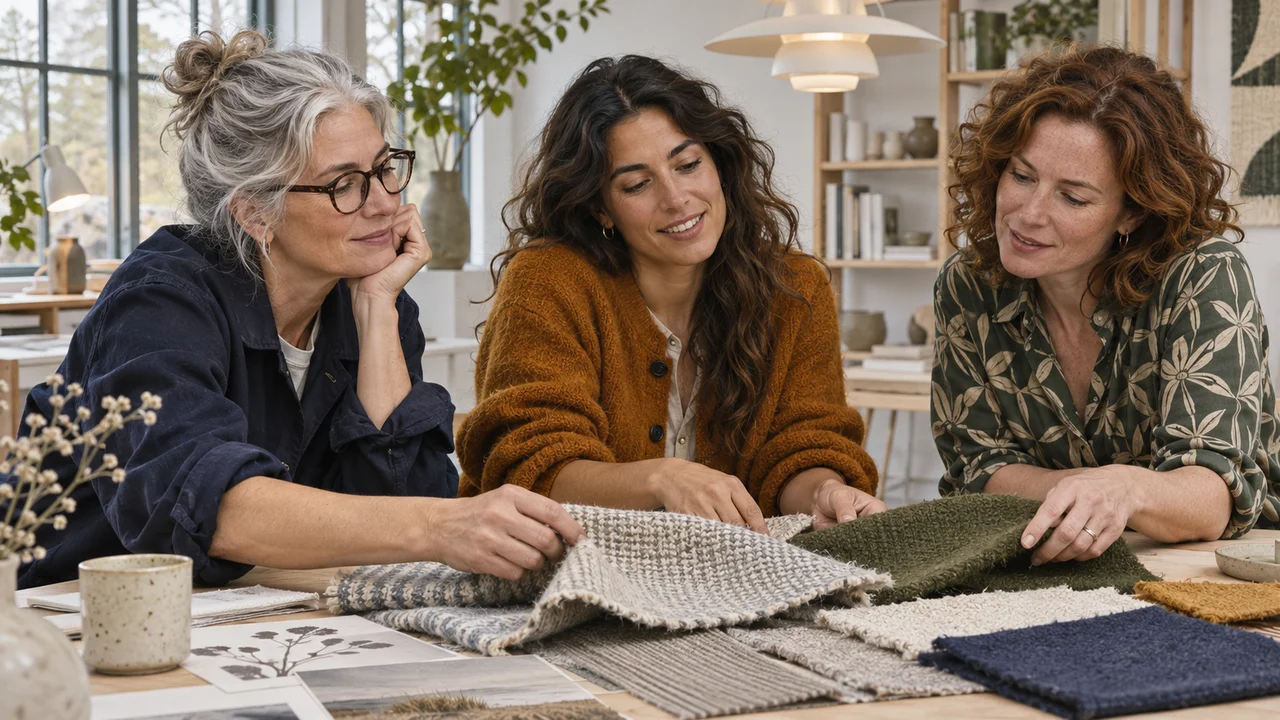
The similarities often matter more than the differences. Light colouring occurs in all three countries and none lacks deeper skin tones, darker eyes or textured hair. The examples below compare settings and cultural references rather than assigning a body type or temperament to each country.
| Topic | Denmark | Sweden | Norway |
|---|---|---|---|
| Appearance | A broad range of colouring and face shapes, with some overlap with northern Germany as well as Scandinavia. | Light and dark features are both part of the range; no single face is representative. | Familiar northern European combinations exist alongside many distinct family backgrounds. |
| Everyday style | Think of layers that work for a cycle commute or a windy harbour. | Relaxed tailoring and clean lines are familiar design references, not dress requirements. | Weatherproof layers are useful, especially when a day includes outdoor time. |
| Social values | Informality and modesty are common language for discussing how people relate. | Consensus is a useful cultural reference, but individuals may prefer a direct exchange. | Independence and personal space are often discussed without being universal expectations. |
| Communication | A short answer or dry remark may be meant plainly or playfully. | A measured discussion can matter more than delivery; do not equate it with agreement. | A little reserve need not mean reluctance to talk once a shared topic comes up. |
For more focused comparisons, read what Swedish women look like and Norwegian women features. If your real question is whether two people enjoy the same style of conversation, listen to how they clarify a disagreement or share a joke. You cannot get that from their passport or a comparison chart.
Personality and Typical Danish Traits
Directness and Dry Humour
A simple “That doesn't work for me” can be a straightforward answer rather than a rebuke. And a dry joke may be delivered without an obvious change in expression. If you are unsure whether something is meant literally, ask in a friendly way. You will find Danes who prefer a lot of warmth and explanation, just as you will encounter others who would rather get to the point. Neither style is a measure of how much a person cares.
Equality and Independence
People may expect to have an equal say in decisions, whether discussing a project at work or deciding who is doing what at home. Independence in that sense means being able to make choices and voice preferences. It does not mean that someone never wants help or companionship. Offer rather than assume, and accept the answer without reading a polite decline as disapproval.
Hygge, Trust and Work-Life Balance
Hygge can describe an agreeable time with familiar people: putting the kettle on after a wet commute, making supper together or sitting around the table after a meal. It is not always a carefully decorated room. Trust grows through ordinary actions such as doing what you said you would do. Making room for life outside work can matter too, but not everyone has a job that allows predictable time off or the same idea of a restful evening.
Janteloven: Modesty Over Showing Off
Janteloven, the Law of Jante, is a literary idea often used as shorthand for discomfort with showing off. Some Danes recognise the observation; others question whether it discourages people from speaking proudly about their work. You can share a success without using it to outrank everyone at the table. Expect an individual view, not a national code of conduct.
Stereotypes vs Reality
| Stereotype | Reality |
|---|---|
| All Danish women are blonde | A familiar image does not account for brown, black, auburn or grey hair. |
| They are all tall | A mean describes the middle of a dataset, not a minimum height or how any one woman looks. |
| They are cold | Someone may be private or brief with strangers and animated among friends. Reserve alone does not tell you why. |
| They never wear make-up | An understated result may still involve cosmetics, and plenty of people like styles that are deliberately noticeable. |
| They do not want serious relationships | Different people want different futures. Being self-reliant or taking time to commit does not rule out a long-term relationship. |
What Dating a Danish Woman Is Like
A casual first meeting gives both people a chance to find out whether they want another. You can offer to split the bill without making assumptions about who invited whom or treating payment as a sign of commitment. Let each person have a say in the time, format and pace, and keep the invitation clear enough that it can be declined without awkwardness.
Some people prefer a slow start and are quite direct once they know they are interested. A busy week or low-key first date says little on its own. If you want a second meeting or a more serious relationship, say so and give the other person a chance to answer. Read dating in Denmark today for the national picture, or how to date in Copenhagen for the practical details.
Meeting Danish Women
If you are moving from reading about the culture to planning a local introduction, consult where to meet women in Copenhagen or where to meet women in Aarhus. Those guides cover places and activities; this page is about appearance, style and cultural context.
Related Scandinavian Reading
- Scandinavian women features: a regional overview.
- Scandinavian dating culture: context for equality, pace and expectations.
- How Scandinavians show interest: how to read invitations and follow-through.
FAQ About Danish Women
What do Danish women look like?
Blonde or light-brown hair and light eyes are familiar in Denmark, but Danish women have a wide range of skin tones, hair colours and builds. Brown eyes, black or red hair, and curly or coily textures are also part of everyday Danish life.
What are typical Danish facial features?
There is no single typical Danish face: oval faces and defined cheekbones are possible examples, not defining features. Jawlines, nose shapes, eyebrows and eye colours vary within families and across the country.
What is the average height of Danish women?
In the NCD-RisC adult height study, the estimated mean for Danish women born in 1996 was about 167.2 cm at age 18. That is a historical birth-cohort estimate, not a current average for every adult age group.
Are all Danish women blonde?
No. Danish women can have blonde, red, light-brown, dark-brown or black hair, and those colours come in many shades. Childhood blond hair may darken over time, and a photograph cannot always tell you whether a colour is natural.
What are common personality traits of Danish women?
Straightforward conversation, dry humour and respect for independence are familiar themes in Danish culture. They are social cues to listen for, not personality traits that every Danish woman shares.
How are Danish women different from Swedish and Norwegian women?
There is no reliable way to distinguish the three by appearance alone. Cities, design scenes and outdoor traditions can give style a different context, but language and a person's own account of where she grew up tell you more than a portrait.
What are Danish beauty standards?
Understated make-up, useful layers and relaxed tailoring are visible parts of Danish style. They coexist with bold colours, expressive make-up and very different personal preferences. No single look is required to fit in.
What is dating a Danish woman like?
A first date can be casual, with each person free to suggest a plan or offer to split the bill. Some people take time to build trust and speak plainly once they know what they want. Ask what works for her rather than relying on a cultural rule.
Conclusion
Light colouring, useful layers and dry humour are recognisable parts of the Danish picture. None tells you what to expect from everyone. A birth-cohort estimate can shed light on height and a fashion event can show an aspect of design, but a person is the best source on her own background, preferences and plans.
 Start Live chat
 Send Message