Where to Meet Women in Aarhus: Local Communities That Work
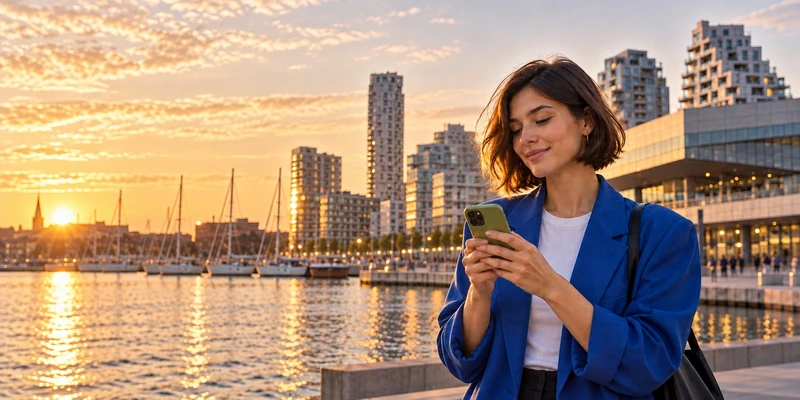
Aarhus can feel socially full before a newcomer has entered it. School friendships, university cohorts, workplaces, sports associations, and family networks keep many calendars occupied, while the city's small scale makes established connections visible. The way in is not a louder introduction; it is a useful role in places such as Dokk1, Godsbanen, an adult course, a forening, a festival team, or an organised harbour activity.
Aarhus is compact enough for people to recognise one another, yet large enough to contain university, international, professional, creative, and long-established local circles. This guide focuses on entering those circles respectfully. For country-level communication and relationship context, read about dating in Denmark today.
Use an Aarhus match to discover a shared interest, then meet somewhere both people already understand.
Why Aarhus Feels Open but Still Relies on Established Circles
Aarhus has students, researchers, healthcare workers, technology and business professionals, artists, families, international residents, and people rooted in East Jutland. The city's manageable scale creates repeated encounters, but it can also make friendship networks feel settled.
Danish informality does not mean instant intimacy. A conversation may be friendly and relaxed without carrying romantic intent. Familiarity through an association, course, volunteer role, or recurring event gives both people time to observe reliability.
Do not measure progress only by immediate dates. New friends, invitations, and introductions strengthen your social position. In a compact city, being known as considerate and dependable matters more than collecting many short interactions.
Aarhus Community Activities: Create a Weekly Pattern
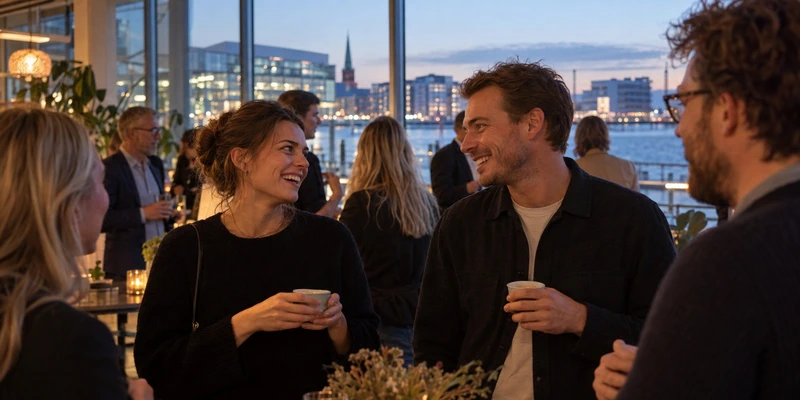
Aarhus community activities range from library programmes and creative workshops to sports associations, volunteering, language learning, and public cultural events. Choose one recurring commitment and one occasional event instead of searching for a different crowd every weekend.
| Your preference | Useful Aarhus direction |
| Quiet conversation | Libraries, reading groups, public talks, adult education |
| Creative participation | Godsbanen workshops, arts courses, cultural houses |
| Active social life | Sports associations, running, cycling, climbing, water activities |
| International circle | Language courses, welcome activities, university public events |
| Community purpose | Volunteering, neighbourhood initiatives, festival support |
Check the organiser's current calendar and registration rules. Aarhus changes significantly with university terms, holidays, weather, and festival periods.
1. Dokk1 and the Library Network
Dokk1 combines a main library, citizen services, events, learning, exhibitions, and public space near the harbour. Other local libraries can offer reading groups, talks, workshops, language activities, and community programmes closer to home.
Choose a scheduled activity rather than treating a reading or work area as a place to approach strangers. Ask what someone thought about the speaker, book, or workshop, then notice whether she wants to continue.
A recurring programme at one branch provides more social value than visiting every library once. Familiar faces make a short coffee invitation feel natural instead of abrupt.
2. Godsbanen and Creative Workshops
Godsbanen is associated with exhibitions, performances, workshops, making, food, and creative communities. Its practical spaces can bring together people interested in ceramics, textiles, jewellery, woodwork, visual art, performance, and independent projects.
Participate because you want to learn or create. Asking about a process, material, or event gives conversation substance. Do not interrupt someone using tools, presenting work, or managing an exhibition.
Workshops that continue over several sessions allow rapport to emerge through collaboration. Keep feedback respectful and wait until the exchange clearly extends beyond the task before making a personal invitation.
3. The Latin Quarter Through Culture and Familiar Places
The Latin Quarter brings together older streets, independent shops, cafes, crafts, culture, and central city life. It can feel social, but many people are shopping, working, or spending private time with friends.
Use a book event, workshop, exhibition, market, guided activity, or venue you already visit. Familiarity gives an opening that random circulation cannot. A comment about the event is more appropriate than an immediate assessment of appearance.
Keep the interaction light and easy to end. Busy public streets do not remove the need for reciprocity.
4. Trøjborg and Neighbourhood Routines
Trøjborg combines residential life, students, local businesses, green access, and a neighbourhood rhythm distinct from the busiest centre. Its strength is routine rather than one famous attraction.
Look for local associations, cultural programmes, sports, volunteer opportunities, repeated cafe visits, and activities connected with nearby green space. Speak with the wider community rather than targeting only potential dates.
Residents value the area as home. Avoid hovering around ordinary errands or using a quiet neighbourhood as an approach circuit.
5. Frederiksbjerg and Jægergårdsgade
Frederiksbjerg is known for food, independent businesses, local streets, markets, and an everyday city atmosphere. It works well for a date already arranged and for events tied to food, craft, neighbourhood culture, or small venues.
Ordinary shopping and dining are not automatic social invitations. Use announced activities or become a familiar participant in a place you genuinely enjoy.
If conversation becomes reciprocal, propose something proportionate: another coffee, a nearby event, or exchanging details. Do not pressure someone while she is working or waiting for friends.
6. Aarhus Ø and Organised Harbour Activities
Aarhus Ø combines new housing, waterfront public space, architecture, harbour activity, swimming, and routes used for walking or exercise. It is visually open, but people using the harbour alone may want privacy.
Join an organised swim, paddle, running, architecture, photography, or community event. Shared activity creates a much better opening than approaching women in swimwear or interrupting individual exercise.
For a first date, agree on a precise landmark and check weather conditions. The waterfront can become uncomfortable quickly in wind or rain, so offer an indoor alternative.
7. Sports Associations and Foreningsliv
Danish association life connects people through football, handball, running, cycling, climbing, rowing, dance, outdoor activity, and many less familiar interests. Membership creates repeated contact and shared responsibility.
Choose a club suited to your ability and schedule. Arrive on time, help with practical tasks, and respect group norms. Reliability contributes more to social trust than athletic performance.
Do not turn training into continuous flirting. Physical cooperation and encouragement belong to the sport; they are not proof of attraction.
8. Aarhus University Public Events and Alumni Life
Aarhus University influences the city's age profile, cultural calendar, research community, and international population. Public lectures, debates, alumni activities, conferences, and open cultural events can connect adults around ideas.
Use age-appropriate settings. A professional seeking a serious relationship should not attend student events merely to approach younger women. Respect study spaces and do not interrupt staff or students who are working.
Discuss the subject first. If conversation continues naturally, ask whether she would like coffee after the event rather than requesting private information immediately.
9. Adult Education and Danish Classes
Adult education can include language, cooking, history, art, music, movement, practical skills, and public discussion. Danish courses are particularly useful for newcomers who want access to local life beyond international circles.
The classroom is not a dating service. Contribute fairly, practise with everyone, and let trust grow over time. Teachers and classmates are not responsible for providing free emotional or language labour.
A shared learning goal gives conversation depth. When mutual interest is visible, a simple invitation after class is less disruptive than flirting throughout the lesson.
10. Volunteering and Festival Communities
Aarhus has volunteering connected with culture, events, visitors, social support, neighbourhood work, and environmental causes. Festival teams can create intense cooperation, while year-round roles provide steadier familiarity.
Keep the purpose first. Do not pursue beneficiaries, exploit vulnerable settings, or make another volunteer feel that participation comes with romantic attention.
Choose a role you can perform well. Showing up, completing tasks, and treating everyone respectfully builds a reputation that lasts beyond one event.
International Communities Without Treating Them as Dating Pools
Welcome activities, international associations, language groups, professional networks, and university communities help newcomers build practical and social connections. They are useful because participants understand the challenges of entering a new city.
Do not assume international women are more available or easier to approach than Danish women. Ask about the individual person's interests and life in Aarhus rather than beginning with nationality.
Contribute information and include others. A connection becomes romantic only when both people signal that change.
Match Aarhus Districts to Your Interests
| Area | Useful context | Practical caution |
| City centre and Latin Quarter | Culture, books, crafts, cafes, events | Shopping and work are not invitations |
| Godsbanen and Aarhus K | Creative workshops and independent culture | Respect workspaces and performers |
| Trøjborg | Neighbourhood groups and green routines | Protect residential privacy |
| Frederiksbjerg | Food, markets, local streets, small events | Avoid interrupting errands or staff |
| Aarhus Ø | Water, architecture, organised sport | Do not interrupt swimming or training |
| Gellerup and western communities | Sports, culture, libraries, associations | Participate without stereotyping residents |
A district can suggest activities but cannot tell you what women there want. Personality, relationship goals, and openness must be discovered individually.
Danish and English: Join More Than the Expat Circle
English can support conversation in university, technology, and international settings. Danish gives access to more clubs, neighbourhood discussions, humour, and everyday friendships.
If you are learning, say so simply and make a consistent effort. Do not expect a Danish woman to speak English for your convenience or interpret direct communication as coldness.
Language exchange should be reciprocal. In a developing relationship, both people need to clarify meaning instead of letting one partner carry every difficult conversation.
Let the Shared Activity Open the Conversation
Begin with the shared context: the workshop, route, book, lecture, volunteer task, or event. A practical question lets someone answer briefly without being forced to address romantic interest.
Pay attention to whether the exchange has two participants. She may return a question, stay after the original topic ends, or introduce another subject. Headphones, brief replies, renewed focus on friends, or increased physical distance indicate that you should stop.
Danish directness makes a straightforward invitation appropriate. Offer it once, keep the plan simple, and accept the answer without requesting an explanation.
Suggest a First Aarhus Date From an App
An app can confirm dating intent, but Aarhus geography should guide the next step. Ask about a specific profile detail, then suggest Dokk1, a Latin Quarter café, or another central place that neither person must cycle across the city to reach. Avoid generic praise about Danish women; show that you noticed this woman's routine and interests.
Once messages flow in both directions, propose two practical times for a short public meeting. Coffee, a library event, an exhibition, a market, or a central walk is easier to accept or decline than a full evening.
Confirm the exact entrance and transport. Financial transfers, account access, identification, passwords, and intimate material should remain private. Review dating chat red flags before disclosing anything sensitive.
Weather, Cycling, and Seasonal Planning
Summer supports harbour activity, parks, beaches, festivals, and long evenings. Autumn and winter move more social life into libraries, courses, cultural houses, volunteering, and clubs.
Wind and rain can change a waterfront or cycling plan quickly. Confirm on the day and offer an indoor alternative. Never use bad weather to pressure someone into a private home.
A year-round association or course is more useful for genuine connection than waiting for the largest summer festival.
Approaches That Usually Fall Flat in Aarhus
- Assuming informal Danish communication means immediate attraction.
- Joining student or international events only to seek dates.
- Interrupting women who are studying, cycling, swimming, or working.
- Using hygge as a stereotype instead of learning individual preferences.
- Relying only on Friday nightlife and ignoring association life.
- Expecting English without making any effort to learn Danish.
- Continuing after refusal, short answers, or visible discomfort.
Aarhus may feel relaxed, but respect for autonomy and equality remains central.
Compare Meeting Women in Aarhus and Copenhagen
Copenhagen offers a larger metropolitan market, more international traffic, and a wider volume of events. Aarhus is smaller, strongly influenced by university life, and more likely to reward repeated participation in overlapping communities.
For the capital-city route, read where to meet women in Copenhagen. Men considering cross-border relationships can use international dating for Danish men.
International dating should reflect genuine cultural interest, not frustration with local women or the belief that someone abroad will require less effort.
Practical Questions About Meeting Women in Aarhus
Where can you meet single women in Aarhus?
Libraries, creative workshops, sports associations, volunteering, language activities, university-related public events, neighbourhood culture, and organised harbour or outdoor groups provide useful social settings. Dokk1, Godsbanen, the Latin Quarter, Trøjborg, Frederiksbjerg, and Aarhus Ø each support different routines.
Is Aarhus a good city for meeting women offline?
Yes, if you join recurring communities. The city is compact and socially active, but many residents rely on existing friendship, study, work, and association networks. Familiarity usually works better than repeated cold approaches.
Do you need Danish to date in Aarhus?
English can work in university and international circles, but Danish gives access to more local activities and conversational nuance. Make a sincere effort and never assume that another person wants to translate every interaction.
Are dating apps useful in Aarhus?
Yes. Apps can clarify that both people are open to dating, especially when study, work, and established circles limit spontaneous meetings. Move toward a short public meeting after reciprocal conversation rather than chatting indefinitely.
Can you meet women around Aarhus University?
Public talks, alumni activities, cultural programmes, and open events can be useful. Respect campus purpose, choose an age-appropriate setting, and do not interrupt students or staff while they are studying or working.
What is the best season for meeting people in Aarhus?
Summer supports harbour, park, beach, cycling, and festival activities, while colder months favour libraries, cultural houses, courses, volunteering, and association life. A repeatable year-round routine matters more than one season.
Become a Familiar Participant, Not a Passing Approach
Use Aarhus's size to your advantage. A multi-session workshop at Godsbanen, a branch-library programme, or a sports association can connect with other parts of your life; soon the city feels less like separate venues and more like a network of familiar faces.
Protect that network by behaving well when attraction is not returned. Keep attending for the activity, avoid asking out several members in quick succession, and make a personal invitation only when conversations have already begun escaping the formal task.
Let Aarhus become familiar through participation, and let one familiar person become a date without pressure.