Where to Meet Women in Rotterdam: Join the City's Real Life
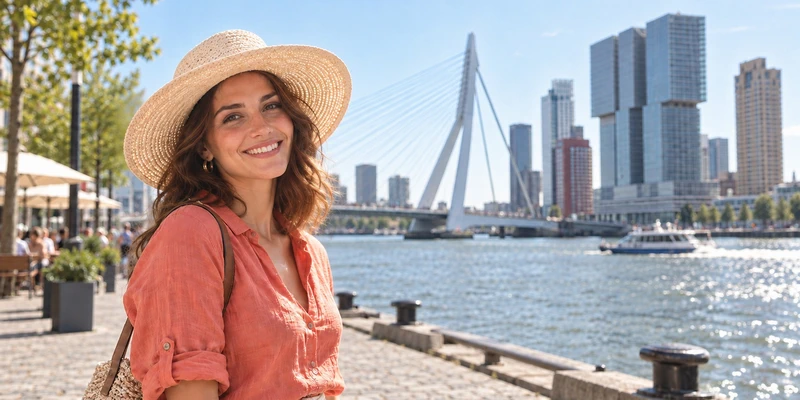
Rotterdam is easier to understand through what people build and do than through a list of pickup venues. Architecture walks, port stories, sports clubs, neighbourhood initiatives, contemporary culture, and volunteer projects reflect the city's practical energy. They also create a reason for two strangers to exchange more than a glance while commuters hurry through Centraal or crowds fill Witte de Withstraat.
Rotterdam is international and direct, but it is not socially uniform. Katendrecht, Oude Noorden, Kralingen, Delfshaven, Kop van Zuid, and the centre attract different routines. This guide explains how to enter those environments with purpose. The national overview of dating in the Netherlands today covers Dutch communication and relationship expectations.
Move from profile detail to a direct Rotterdam plan near transit, culture, or the district you discussed.
Rotterdam Is a City of Participation, Not a Dating Stage
People move through Rotterdam for work, education, healthcare, logistics, creative industries, public service, and international business. The city offers many encounters, yet a fast exchange near a station or office rarely provides enough context to understand interest.
Shared activity changes that. A sports club, architecture walk, volunteer shift, workshop, or neighbourhood event lets conversation grow around something concrete. Directness works better when it is supported by social awareness.
A useful first goal is not obtaining a phone number. It is becoming part of two or three communities that suit your real life. Invitations and introductions often follow once people know how you behave.
Rotterdam Cultural Events: Follow the Programme, Not the Crowd
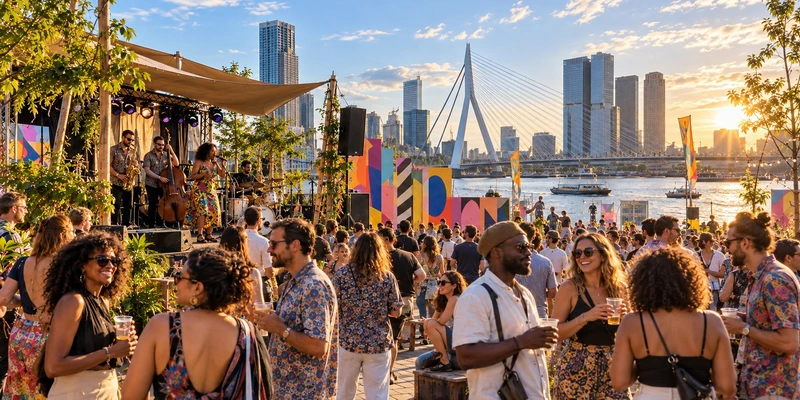
Rotterdam cultural events cover architecture, contemporary art, film, music, performance, public debate, neighbourhood history, and port identity. Small talks, workshops, guided routes, and recurring series make conversation easier than a huge festival crowd.
| What interests you | Where to look |
| Architecture and urban change | Guided walks, lectures, public projects, design programmes |
| Art and film | Museums, galleries, screenings, studio events |
| Movement | Running, cycling, rowing, climbing, team sport |
| Community | Volunteering, neighbourhood houses, local initiatives |
| International life | Language groups, professional associations, newcomer events |
Check the current organiser's page before attending. Registration, capacity, language, and venue can change, particularly during major architecture, art, and port events.
1. Architecture Walks and Urban Programmes
Rotterdam's rebuilt centre, bridges, towers, housing experiments, port conversions, and public art provide natural material for tours and discussion. Architecture programmes attract residents, students, professionals, and visitors who already expect to exchange ideas.
Join a guided walk, lecture, open-building programme, or workshop. Ask what someone thinks about a project rather than presenting yourself as an expert. Curiosity creates room for different opinions.
Large architecture events can be crowded and professionally focused. Respect speakers, guides, designers, and participants who are working, and move a personal invitation outside that role.
2. Museumpark and Culture-Led Meetings
Museumpark and surrounding institutions support exhibitions, screenings, public talks, design, photography, and contemporary art. They work well for a first meeting arranged online because the activity gives both people something to discuss.
For meeting someone new, use a scheduled tour or public programme. Quiet galleries are not places for following a stranger between rooms. Begin conversation only when context and body language make it welcome.
A short exhibition followed by coffee is easier to manage than an entire evening. It also lets either person leave without awkward negotiation.
3. Katendrecht Through Culture and Local Stories
Katendrecht combines port and migration history with cultural spaces, food, cafes, performance, and waterfront views. Around Deliplein and nearby institutions, an announced activity provides a better opening than simply circulating through restaurants.
Attend an exhibition, residents' storytelling programme, performance, food event, or guided walk. Treat the area's history as more than decoration and avoid making assumptions about the diverse communities connected with it.
If you arrange a date here, name the exact venue or entrance. Katendrecht and the surrounding waterfront contain enough destinations that a vague location can create confusion.
4. Oude Noorden and Neighbourhood Creativity
Oude Noorden combines residential streets, the Rotte, independent businesses, studios, vintage shops, cafes, and local initiatives. Its social value comes from neighbourhood repetition rather than one landmark.
Look for makers' events, markets, community programmes, music, workshops, or an activity connected with the river. Returning to one place allows recognition to build without forcing interaction.
Remember that this is primarily a home for residents. Do not turn normal errands or quiet streets into a route for approaching women.
5. Historic Delfshaven Without Tourist Assumptions
Delfshaven offers historic harbour scenery, workshops, small cultural venues, local businesses, and neighbourhood life that contrasts with central Rotterdam's modern skyline. It can support walks, history programmes, creative events, and relaxed dates.
A guided history route, workshop, or announced gathering creates context. People photographing the harbour or having a private drink have not joined a social event simply by being visible.
Keep invitations modest. A walk and coffee lets conversation determine whether a longer plan makes sense.
6. Kralingen, Kralingse Bos, and Organised Outdoor Life
Kralingen combines university connections, residential areas, cafes, and access to Kralingse Bos and the lake. Running, rowing, cycling, walking, and outdoor clubs can connect people through regular activity.
Join a group matched to your level. Shared routes and post-training conversation are useful; stopping an individual runner or cyclist is not. Headphones and focused training should be treated as requests for space.
For a first date, agree on a recognisable entrance or venue and keep weather in mind. A public indoor alternative prevents rain or wind from turning into pressure to visit a private home.
7. Witte de With Through Art Rather Than Bar-Hopping
The Witte de With area brings galleries, film, performance, music, restaurants, and nightlife close together. During the day and early evening, cultural programmes give clearer conversational context than late-night bar traffic.
Choose a screening, exhibition, talk, or performance. Discuss the programme first and allow the exchange to end naturally. A lively street does not mean every group wants outside attention.
Alcohol makes politeness and attraction harder to distinguish. Never follow someone between venues or interpret service from staff as personal interest.
8. Sports Clubs and Rotterdam's Active Communities
Rotterdam offers football, running, cycling, rowing, climbing, dance, fitness, martial arts, and many community sports. Clubs work because people meet repeatedly and share responsibility for training or events.
Pick an activity that fits your ability and commute. Help with equipment, arrive when expected, and speak with the group rather than focusing on one woman.
Physical cooperation belongs to the sport. It does not prove romantic interest, and a refusal should never affect how someone is treated in the club.
9. Volunteering in a Working City
Community kitchens, cultural organisations, environmental projects, festivals, language support, animal welfare, and neighbourhood initiatives can connect people through useful work. The setting also reveals patience and reliability.
The cause comes first. Do not pursue beneficiaries or use vulnerable circumstances to create intimacy. Other volunteers must be able to contribute without managing unwanted attention.
Choose one role you can maintain. Consistent contribution creates more trust than appearing at several projects once to widen a dating pool.
10. Professional and International Communities
The port, universities, architecture, logistics, healthcare, technology, engineering, creative industries, and international organisations produce many professional networks. Public lectures, associations, alumni events, and continuing education can connect adults with related interests.
Keep networking useful on its own. Ask about the event or field rather than searching job titles for status. Where hierarchy exists, personal invitations need particular care.
Do not retrieve contact details from a professional system for private use. If both people want to continue, exchange information openly.
Language Exchanges and Dutch Classes
Rotterdam's international population supports Dutch courses, language exchanges, and newcomer activities. They help residents move beyond an English-only professional circle and understand local humour and directness.
Exchange languages fairly and speak with several participants. The purpose is learning, not access to women from a particular nationality.
If one conversation becomes personal, ask whether she would like to continue at another public activity. Teachers and partners are not responsible for translating an entire relationship.
Choose a Rotterdam Area by Activity, Not Stereotype
| Area | Useful context | Remember |
| Centre and Museumpark | Architecture, museums, talks, film | Busy visitors may have fixed plans |
| Katendrecht and Kop van Zuid | Culture, port history, food, waterfront | Use a precise meeting place |
| Oude Noorden | Studios, markets, local initiatives | Respect residential routines |
| Delfshaven | History, workshops, relaxed walks | Visibility is not an invitation |
| Kralingen | University links, lake, organised sport | Do not interrupt individual exercise |
| Witte de With | Art, film, performance, nightlife | Alcohol can blur signals |
No postcode predicts personality, income, or relationship goals. Use neighbourhoods to find activities, then learn about the individual person.
Dutch Directness Needs Context and Warmth
Clear communication can make dating easier, but bluntness without context can feel dismissive. State your interest plainly while leaving the other person room to decline.
Splitting costs, choosing a practical venue, or scheduling ahead may be normal topics rather than signs of low interest. Ask instead of performing a romantic script based on nationality.
Directness applies to boundaries as well. A no, lack of reciprocity, or repeated unavailability should be accepted rather than debated.
Open a Conversation With What Is Happening
Use the shared situation: an installation, building, walking route, workshop, sports event, or volunteer task. A relevant observation creates less pressure than a comment about appearance.
Watch whether the exchange expands. Questions returned to you, new topics, and willingness to remain are encouraging. Brief replies, headphones, attention returning to friends, or increased distance mean it is time to leave.
Offer one simple invitation when the interest runs both ways. Do not request an explanation if she declines.
From a Dating App to a Short Rotterdam Meeting
Apps suit Rotterdam's commuting workforce, but directness should produce a useful plan rather than a rapid demand to meet. Begin with the building, sport, neighbourhood, or cultural interest shown in the profile. Then suggest a public point near transit and avoid turning Dutch identity or an international background into the subject of a generic compliment.
Once both people contribute consistently, suggest two workable times for coffee, an exhibition, an architecture walk, or another public activity. A short first plan is easier to accept and safer for both sides.
Keep money, account access, identification, passwords, and intimate material private. The guide to dating chat red flags explains when inconsistent behaviour deserves caution.
Waterfront and Festival Safety
Rotterdam's river, harbour, summer events, and major festivals create memorable settings, but crowds reduce clarity. Identify an exact meeting point, plan transport, and keep the first meeting public.
Do not enter restricted port areas or isolated industrial spaces for atmosphere. Weather and late-night connections can also change a seemingly simple waterfront plan.
Festivals are useful for shared interest, not for ignoring boundaries. If conversation depends entirely on noise and alcohol, exchange details only when both people clearly choose to continue.
What Usually Goes Wrong in Rotterdam
- Treating Dutch directness as permission to be rude or persistent.
- Depending entirely on nightlife around one central street.
- Approaching commuters, cyclists, or people working on laptops.
- Using professional events as informal speed dating.
- Joining language activities only to pursue international women.
- Assuming a multicultural city makes nationality irrelevant.
- Continuing after refusal or clear loss of interest.
Rotterdam appreciates clarity, but respectful timing determines whether clarity feels confident or intrusive.
Rotterdam and Amsterdam Offer Different Social Routes
Amsterdam has heavier tourism, a larger concentration of international visitors, and a different historic urban rhythm. Rotterdam's architecture, port economy, neighbourhood contrasts, and working-city identity create other ways to participate.
Compare the capital with where to meet women in Amsterdam. Dutch men considering relationships beyond the country can read international dating for Dutch men.
Neither local nor international dating is a shortcut. Both depend on compatible intentions, clear boundaries, and sustained effort.
Practical Questions About Meeting Women in Rotterdam
Where can you meet single women in Rotterdam?
Architecture events, museum programmes, sports clubs, volunteering, language activities, guided walks, workshops, and neighbourhood initiatives provide useful social context. Katendrecht, Oude Noorden, Delfshaven, the city centre, and Kralingen each support different interests.
Is Rotterdam nightlife good for meeting women?
Nightlife can support conversation, particularly around shared events or friends, but crowded bars produce unclear signals. Cultural programmes and recurring groups usually provide better continuity than approaching strangers repeatedly on a busy night.
Do you need Dutch to date in Rotterdam?
English is widely usable in many international and professional settings, but Dutch opens more local communities and conversational nuance. Make a sincere effort and ask which language the other person prefers.
Are dating apps useful in Rotterdam?
Yes. They can clarify that both people are open to dating in a city where work, study, commuting, and existing circles shape schedules. Suggest a short public meeting once the conversation becomes reciprocal.
Is Katendrecht a good area for a first date?
Katendrecht offers culture, food, waterfront settings, and distinct meeting points around Deliplein and nearby venues. Choose one precise public location instead of treating the whole peninsula as a meeting address.
How can newcomers build a social circle in Rotterdam?
Join one recurring activity near home, one interest-based or professional community, and occasional public events. Speak with the whole group, volunteer for practical tasks, and return consistently before expecting invitations or dates.
Let Rotterdam Recognise You Before You Rush
Let Rotterdam's working character shape the strategy. Follow one architecture or cultural programme across several dates, contribute to a neighbourhood project, or train with the same club long enough to understand its people. Useful participation is memorable here; social tourism is not.
When someone repeatedly chooses your company, propose a plan with the same clarity: a named exhibition, coffee in the district you discussed, or a short walk from a recognisable landmark. If the answer is no, accept it with equal directness and leave the shared community comfortable.
Rotterdam rewards clarity: say what interested you, name the plan, and respect the answer.