Travel to Meet an Online Partner After 50: A Safe First-Trip Guide

Traveling to meet an online partner after 50 can turn months of messages and video calls into a real relationship, but the trip should confirm compatibility rather than manufacture it. A flight, hotel, or long drive does not create an obligation to feel chemistry, become intimate, promise marriage, or continue dating.
Men and women over 50 may also have travel considerations that younger dating advice overlooks: established work or retirement routines, health and mobility needs, adult children, caregiving, fixed budgets, and less interest in an exhausting itinerary. Good planning protects the relationship as well as both travelers.
This guide covers readiness, video verification, documents, budget, health, accommodation, public meetings, boundaries, and what to do after the visit. It applies to domestic and international travel, including long routes from the United States, Canada, and Australia and shorter cross-border trips within Europe.
Before traveling to meet an online partner after 50:
- confirm identity and relationship details through several video calls;
- agree on the purpose, length, daily pace, and boundaries of the visit;
- control your own documents, money, accommodation, and return transport;
- share the itinerary with someone you trust and schedule check-ins;
- meet first in public and keep a backup plan that works without your partner.
Is Your Online Relationship Ready for an In-Person Meeting?
A first trip should follow a stable pattern of communication, not one intense week. Both people should know basic facts about each other's lives and have enough spontaneous interaction to notice whether stories remain consistent.
Before booking, you should have:
- used live video more than once and at different times;
- discussed relationship status and the purpose of the meeting;
- seen reciprocal effort rather than one person carrying every conversation;
- talked about location, family responsibilities, work, and realistic availability;
- resolved at least one minor misunderstanding respectfully;
- agreed that either person can change plans or end the meeting safely.
You do not need certainty that the relationship will last. You need enough evidence that the person is consistent, the meeting is mutual, and the logistics do not make you dependent. Use how to find a serious relationship after 50 to evaluate readiness and commitment before turning online hope into travel. Singles who are still at the introduction stage can browse the senior dating profiles before applying this travel checklist to a specific connection.
When You Should Not Book the Trip Yet
Delay travel when basic questions remain unanswered or when urgency is replacing trust. A legitimate partner may be excited, but should still respect the time needed to verify details and plan safely.
Warning signs include:
- repeated refusal to use live video;
- inconsistent names, relationship status, location, work, or family details;
- pressure to pay debts, emergencies, tickets, or documentation costs;
- requests to carry packages, cash, or documents for another person;
- demands that you hide the trip from friends or family;
- insistence that you stay only in a private home or surrender control of transport;
- anger when you ask ordinary safety or itinerary questions.
A canceled booking is less costly than traveling into a situation you do not understand. Review online dating safety after 50 and the red and green flags of dating over 50 before committing money.
Use Video Calls to Prepare for the First Trip
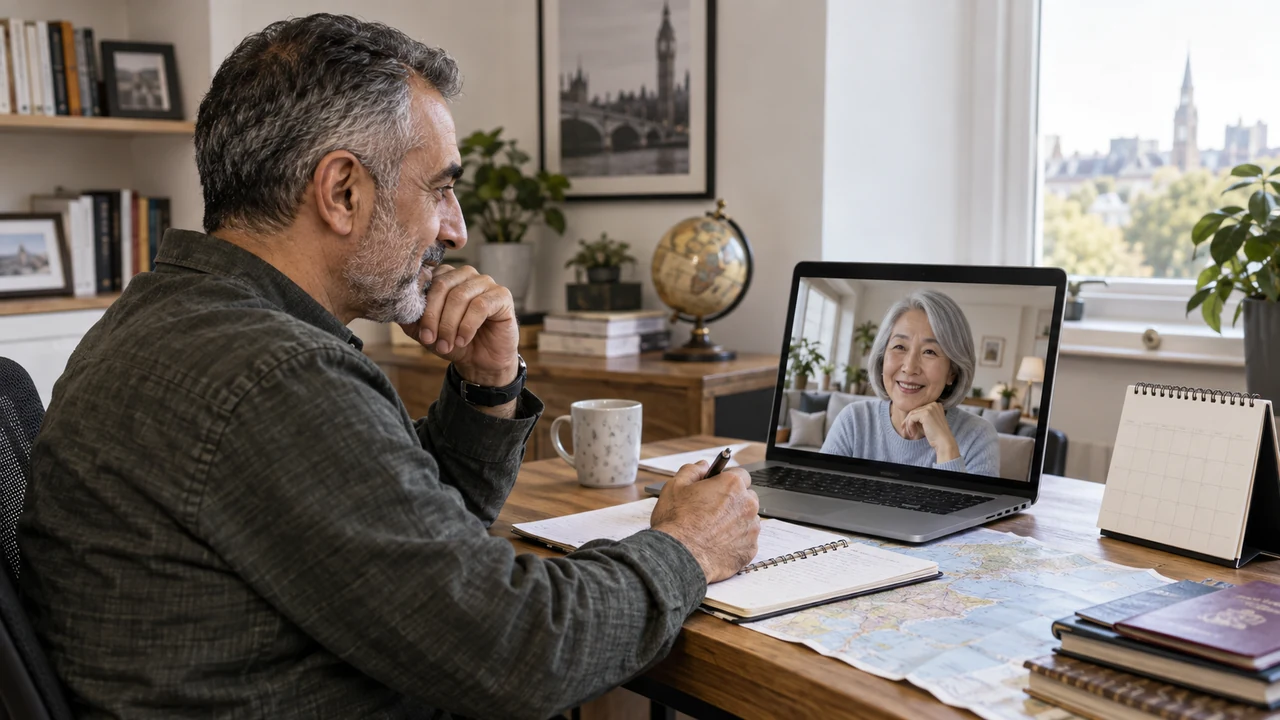
Video calls are not only a way to verify appearance. They help both people plan the pace and purpose of the visit. Use at least one call specifically for logistics rather than romance.
Discuss arrival time, airport or station pickup, hotel location, transportation, daily activities, private time, accessibility, meals, and emergency contact options. Repeat key details in writing afterward so neither person depends on memory or translation.
If language differences exist, speak slowly and confirm meaning without pretending to understand. Automated translation can help with simple details but may distort emotional or legal language. Important bookings and requirements should be checked directly with the relevant provider or official authority.
The video dating guide for men over 50 explains preparation, conversation, and verification without treating one call as complete proof of identity. Use the platform's online video dating tools to build real-time familiarity before discussing tickets or accommodation.
How to Plan a First Trip to Meet an Online Partner After 50
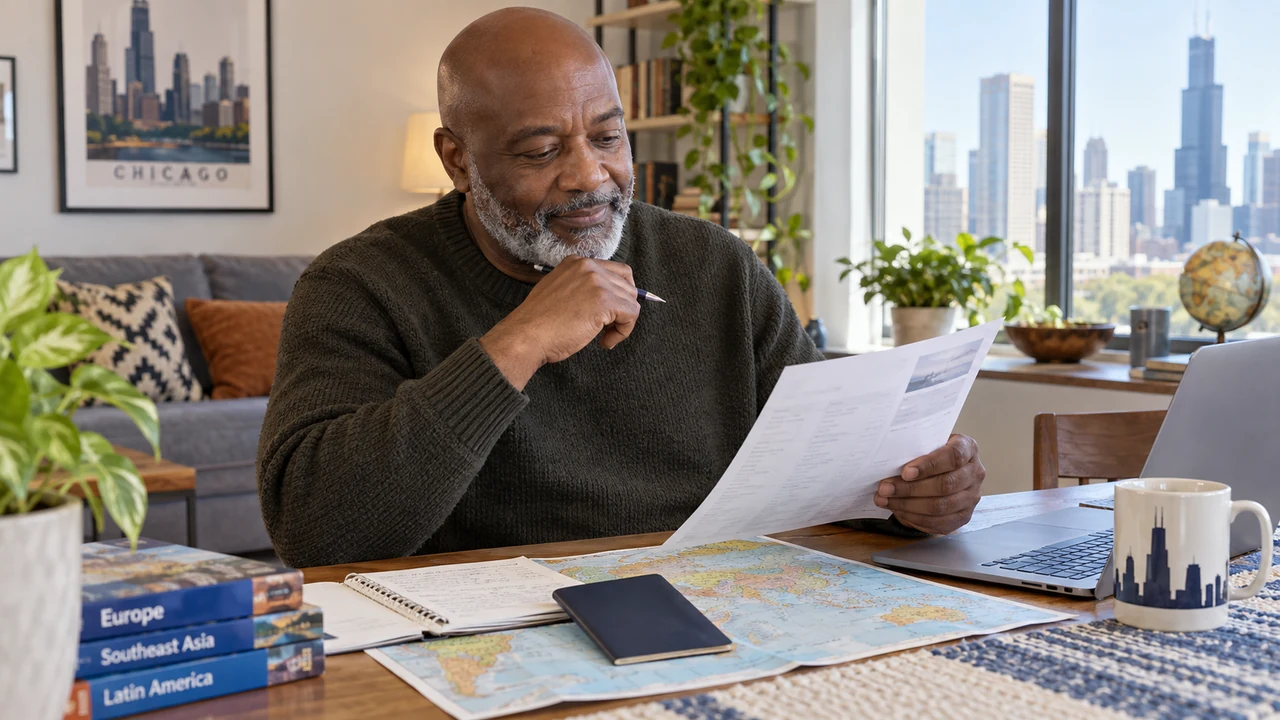
Book transport and accommodation through providers you can contact directly. Keep confirmations in your own email account and store an offline copy. Your partner may suggest neighborhoods or routes, but you should be able to reach the hotel, airport, and public meeting point independently.
A useful plan includes:
- confirmed arrival and return transportation;
- independent accommodation in a practical area;
- a first meeting in a public place;
- time alone for rest and reflection;
- backup activities if schedules or chemistry change;
- local transport information and emergency contacts;
- copies of essential documents stored separately from the originals.
Do not let the other person hold your passport, bank cards, medication, phone, or return ticket. These boundaries are sensible even when the relationship appears genuine.
Check Passport, Entry, Insurance, and Local Requirements
Travel requirements can change and depend on citizenship, destination, trip duration, and route. Check passport validity, visas or electronic authorizations, transit rules, insurance conditions, and entry requirements through official government and transport-provider sources before paying for nonrefundable arrangements.
Do not rely on a romantic partner, social-media post, or old blog article as the only source for immigration or legal information. If your plans involve marriage, sponsorship, relocation, or extended residence, obtain advice appropriate to your circumstances from qualified professionals.
Keep digital and paper copies of important information, but protect passport numbers and identity documents from unnecessary sharing. A genuine partner does not need full document scans simply to meet you.
How Much Does It Cost to Meet an Online Partner Abroad?
Include more than the flight or train. Accommodation, insurance, ground transport, meals, communication, accessibility needs, flexible changes, and emergency funds all affect the true cost.
Agree on expenses before arrival. Each person should know who pays for meals, tickets, local travel, and shared activities. Fairness does not require an exact split, but neither person should discover financial expectations after becoming dependent on the trip.
Avoid sending money so that the other person can prepare for your arrival. If you want to buy a ticket or reserve an activity, pay the provider directly and keep control of the booking. Never treat a costly trip as a reason the other person owes affection, intimacy, or commitment.
| Trip item | Book independently | Arrange together | Avoid |
|---|---|---|---|
| Flight or train | Buy through a provider you can contact and keep the return booking in your account. | Compare arrival times and the meeting point. | Sending fare money or allowing another person to control the ticket. |
| Accommodation | Reserve a hotel with clear policies and practical transport. | Discuss a safe area and distance from planned activities. | Depending on a private home for the first visit. |
| Airport and local transport | Save a route and payment option that work without your partner. | Confirm pickup details and a backup meeting place. | Handing over your phone, cards, documents, or return arrangements. |
| Meals and activities | Keep enough money to pay your own share. | Choose a few activities and agree on expectations. | Expensive gifts or bookings used to create romantic pressure. |
| Insurance and emergency funds | Select suitable coverage and keep accessible reserves. | Share only the emergency information the other person needs. | Relying on your partner as the only source of help. |
Plan for Health, Medication, Mobility, and Rest
Discuss only the personal information needed to make the visit safe and comfortable. Relevant topics may include walking tolerance, stairs, dietary requirements, sleep schedule, medication timing, allergies, or access needs. A partner does not need your complete medical history before a first meeting.
Carry medication according to applicable travel rules, keep essential supplies accessible, and leave enough time between connections. Individual health and medication questions should be discussed with a qualified clinician, while airline or border requirements should be confirmed with official sources.
Jet lag and long travel can make a first meeting more tiring than expected. Do not schedule a full romantic day immediately after a transoceanic flight. A brief coffee after arrival may be enough, with the longer date planned after rest.
Where Should You Stay When Meeting an Online Partner for the First Time?
Staying separately is not a sign that you distrust the relationship. It gives both people privacy and reduces the pressure to spend every hour together. It also protects the traveler if plans change or the online connection feels different in person.
Choose accommodation with a clear cancellation policy, reliable transport, and direct contact with the property. Do not hand over access codes or room keys. If your partner visits later, follow the property's guest rules and make the decision after meeting in public.
A private place to sleep and think is especially useful after 50, when rest, medication, mobility, work calls, or personal routines may require predictable space.
Arrange a Safe First Meeting in Public

Choose a cafe, hotel lobby, museum, or busy public square where conversation is possible and both people can leave independently. Daytime is often easier for the first meeting because transport and public activity are more predictable.
Keep the first date shorter than the full visit. Ninety minutes or a relaxed meal gives both people time to compare the online connection with real interaction. If it goes well, plan the next activity together. If it does not, return to your own accommodation without arguing over the remaining itinerary.
Share the meeting location with a trusted person and schedule a check-in. Keep your phone charged and arrange your own route back. For conversation and etiquette, see first-date tips after 50.
A Practical Three-Day Plan for the First Meeting
A simple schedule creates enough shared time to evaluate the connection without making either person feel trapped. Adapt the plan to travel distance, energy, mobility, and the length of the overall visit.
- Arrival day: Check in independently, rest, contact someone at home, and meet briefly in a public place only if both people have the energy. A short coffee is enough after a long journey.
- Second day: Plan one main date with conversation and an ordinary shared activity. Leave time between activities so fatigue or nervousness does not control the day.
- Third day: Spend part of the day independently, then meet again if interest is mutual. Compare expectations calmly instead of treating constant togetherness as proof of compatibility.
If the meeting is going well, later days can include friends, neighborhoods, or daily routines. If it is not, keep the remaining itinerary independent and communicate the decision respectfully.
Agree on Boundaries Before Arrival
Discuss whether the trip is an exclusive romantic visit, an exploratory meeting, or one step in an established relationship. Clarify sleeping arrangements and explain that either person may decline physical affection without ending the entire visit.
A travel invitation is not consent to intimacy. Gifts, flights, meals, or accommodation do not create an obligation. If intimacy becomes possible, discuss consent, sexual health, contraception when relevant, and privacy directly. The guide to intimacy in a new relationship after 50 covers these conversations in more depth.
Boundaries also include photographs and social media. Ask before posting images, tagging a location, or introducing the meeting publicly as a committed relationship.
Balance Couple Time With Independent Time
Do not build an itinerary that requires constant togetherness. Time alone helps each person notice their actual feelings rather than reacting to travel excitement or fatigue. It also prevents the host from becoming a full-time guide.
Plan a few meaningful shared activities and leave open space. Ordinary experiences often reveal more than an expensive excursion: choosing a meal, handling a delay, walking through a neighborhood, or deciding what to do when both people are tired.
Keep at least one activity you can do independently. The trip remains worthwhile even if a date is rescheduled or the romantic connection does not continue.
What If the Online Chemistry Does Not Survive the Meeting?
Online closeness may not translate into physical comfort, attraction, or conversational ease. This outcome does not mean the entire connection was fake. It means the meeting provided information that messages could not.
Do not force affection because the trip was expensive or because families know about it. If you feel safe but uncertain, take time alone and consider a second short meeting. If either person is uncomfortable, communicate respectfully and end the romantic visit.
Independent accommodation, return transport, and a flexible itinerary make honesty possible. Without them, financial and logistical pressure can keep two people in a situation neither truly wants.
Recognize Travel-Specific Red Flags
- Your partner asks you to carry luggage, packages, medication, cash, or documents for someone else.
- Arrival plans change repeatedly toward private or isolated locations.
- You are pressured to cancel your hotel or surrender your passport.
- New relatives or emergencies require money immediately after arrival.
- Your partner prevents private calls with family or friends.
- Discomfort or refusal is met with anger, threats, or public humiliation.
- You are pushed toward marriage, legal papers, investment, or relocation during the first trip.
Leave when safety is uncertain. Contact accommodation staff, transportation providers, local emergency services, or your country's consular resources as appropriate. Do not remain merely to avoid embarrassment.
Special Planning for Travelers From the USA, Canada, Australia, and Europe
Traveling From the United States
Travelers from the United States may face long flights, major time-zone changes, and limited vacation windows. Avoid building every day around the relationship simply because the airfare is expensive, and preserve recovery time before returning to work.
Traveling From Canada
Canadian travelers should plan for long routes from many departure cities, seasonal weather disruptions, phone access abroad, and a practical connection between the arrival airport and independent accommodation.
Traveling From Australia or New Zealand
Australian and New Zealand travelers often need more recovery time and a larger contingency budget. Break up difficult routes when appropriate and avoid scheduling the most important conversation immediately after arrival.
Traveling Within Europe
European travelers may have shorter routes, but crossing a nearby border still requires document, insurance, transport, communication, and accommodation planning. Geographic closeness does not remove the need for identity verification or an independent first-meeting plan.
Choose trip length according to the journey and your physical comfort, not the desire to make the airfare feel worthwhile. A shorter successful visit creates a better foundation than an exhausting stay that forces too much intimacy too quickly.
What to Discuss Before the Trip Ends
Do not turn the final evening into a demand for a life decision. Talk about how the visit felt, whether both people want to continue, and what the next realistic step could be.
Useful questions include:
- What felt natural, and what needs more time?
- How should communication change after the visit?
- Who could make the next trip, and when?
- Are both people still interested in exclusivity?
- Which practical questions remain unresolved?
A serious relationship should not depend on promises made under departure pressure. Confirm important plans again after both people return to ordinary routines.
After You Return Home
Allow time for travel fatigue and reflection, but do not disappear. Send a clear message acknowledging the visit and state whether you want the relationship to continue.
Compare the meeting with the online pattern. Did the person respect boundaries, participate in planning, and behave consistently when plans changed? Did both people feel able to speak honestly? One awkward moment may be nerves; repeated pressure is a pattern.
If interest is mutual, schedule the next call and create a realistic plan for another visit. Long-distance couples can use long-distance dating after 50 to organize communication, travel, finances, and possible relocation.
First-Trip Checklist for Singles Over 50
- Several live video calls completed.
- Identity, relationship status, location, and intentions remain consistent.
- Passport and entry requirements checked through official sources.
- Independent transport, accommodation, and return booking confirmed.
- Travel insurance and health needs reviewed for your circumstances.
- Budget includes changes and emergency funds.
- Trusted person has itinerary and check-in times.
- First meeting is public and easy to leave.
- Boundaries and visit expectations discussed in advance.
- Backup plan works without help from the partner.
Frequently Asked Questions
When should you travel to meet an online partner after 50?
Travel after identity and relationship details remain consistent across messages and several video calls, both people want the meeting, and accommodation, costs, boundaries, and backup plans are clear.
How long should a first trip to meet an online partner last?
A short, manageable visit is usually easier than an open-ended stay. Distance and health affect the length, but both people should have private time and a fixed departure plan.
Should you stay with an online partner on the first visit?
Independent accommodation is safer. It protects privacy, reduces pressure, and lets either person change or end the visit without losing housing or transport.
Who should pay for the first international meeting?
Discuss costs before booking. Both people should understand flights, accommodation, meals, and local travel. Do not send money or allow one person to control all bookings and funds.
How can you meet an online partner safely abroad?
Control your passport, phone, money, hotel, and return route. Meet first in public, share the itinerary with someone you trust, schedule check-ins, and know local emergency options.
What if there is no chemistry at the first meeting?
Be respectful and honest. Do not force affection or continue because travel was expensive. Independent accommodation and a flexible itinerary allow both people to step back safely.
Should couples over 50 discuss health before traveling?
Discuss mobility, medication, dietary, accessibility, or emergency needs that affect the trip. Share only what is necessary and seek personal advice from a qualified clinician when needed.
Is it safe to travel abroad to meet someone you met online?
It can be safer when you verify the person through repeated video calls, control transport and accommodation, meet in public, share the itinerary, and keep a backup plan. Leave when circumstances become inconsistent or controlling.
Should an online partner pick you up at the airport?
A pickup can be convenient, but you should still know how to reach your hotel independently. Keep the address, local transport options, phone service, and payment method available in case plans change.
What should you bring when meeting an online partner for the first time?
Bring required documents, insurance details, medication, a charged phone and backup power, accessible funds, hotel and return confirmations, emergency contacts, and suitable clothing. Keep gifts and valuables modest.
Final Thoughts
Travel to meet an online partner after 50 should reduce uncertainty, not increase dependence. Verify through video, plan independently, meet in public, and keep control of documents, money, accommodation, and transportation.
The best outcome is not an immediate promise. It is an honest meeting that allows both people to decide freely whether online affection can become a safe, practical, and lasting relationship.

 Start Live chat
 Send Message