First Date Tips After 50: A Practical Guide for Men
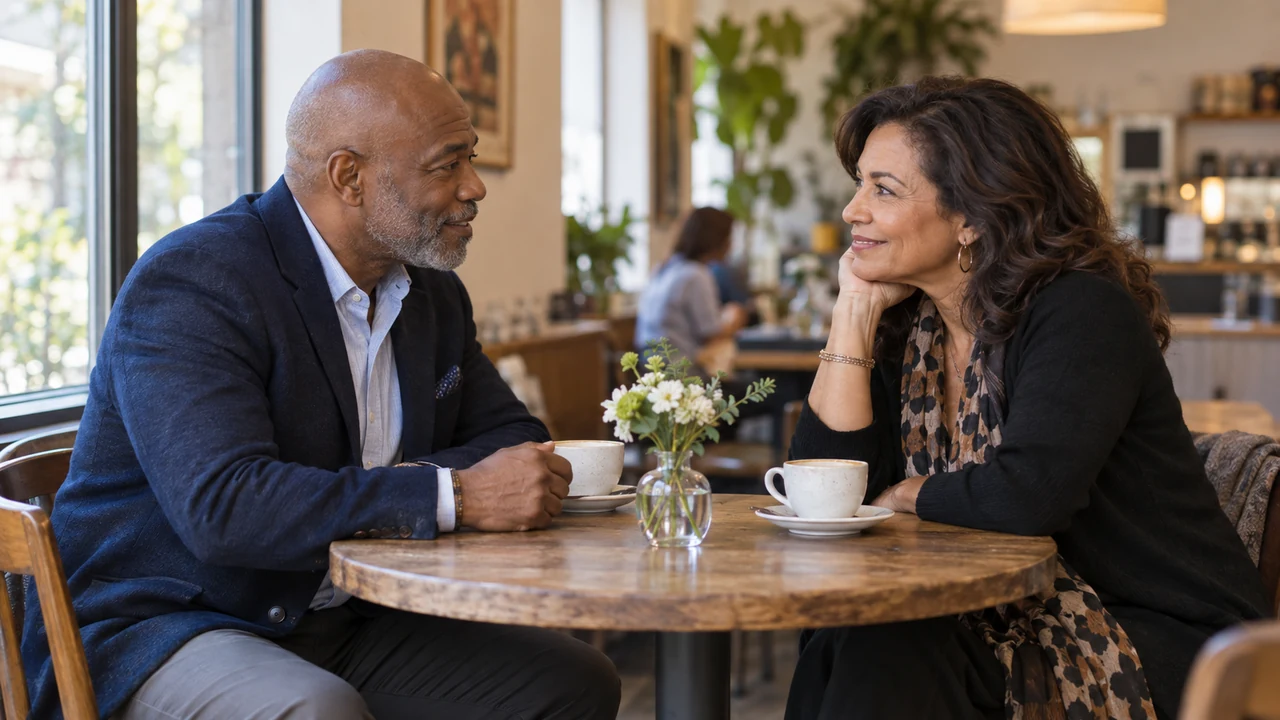
A first date after 50 does not need to prove that you are still attractive, completely healed from the past, or ready to build a new life by dessert. It has one useful purpose: discover whether you feel comfortable enough to have a second conversation. A separate guide explains what women over 50 commonly want in a man without treating mature women as one dating type.
You may be returning after divorce, bereavement, or years of being single. Your last first date may have happened before apps and video calls became normal. The good news is that mature dating does not require elaborate performance. Clear plans, current appearance, genuine curiosity, boundaries, and a manageable meeting create a better foundation than trying to impress someone for hours.
This guide covers preparation, place and timing, conversation, divorce and widowhood, adult children, health, money, safety, attraction, follow-up, and international first meetings. If you have not reached the invitation stage, start with how to meet women after 50.
Why First Dates Feel Different After 50
By 50, most people arrive with an established life. Work or retirement, children, caregiving, property, health, travel, and previous relationships affect availability and future choices. These subjects matter, but placing all of them on the table at once can turn a date into a legal interview.
Mature dating also includes clearer preferences. You may know that you want marriage, committed companionship, separate homes, or a relationship that develops slowly. Clarity is useful when it remains flexible enough to meet the individual rather than checking a list.
The best first date balances two things:
- enough honesty to reveal whether basic lifestyles and intentions could fit;
- enough lightness to let personality, humor, and attraction emerge naturally.
Confirm Interest Before Making Plans
Agree to meet after conversation has become mutual. Both people should ask questions, remember details, and return voluntarily. If you met online, a short voice or video call can reduce uncertainty before travel or a long drive.
Make a specific invitation: activity, general area, day, and time. "Would you like to have coffee near the gallery on Saturday around two?" is easier to answer than "We should meet sometime." Offer one alternative if the first plan does not work, then let her respond.
Do not use a first meeting to solve weeks of inconsistent communication. Repeated cancellations, pressure for money, refusal to speak live, or stories that keep changing deserve attention before you arrange a date.
Choose the Right Place for a First Date After 50
A useful venue is public, quiet enough to talk, easy to find, and simple to leave. Coffee, lunch, a gallery, a small museum, or a walk in a busy park often works. Consider mobility, hearing, weather, parking, public transport, and dietary needs without treating normal accommodations as embarrassing.
Avoid a private home, isolated route, very loud bar, expensive multi-course dinner, or an activity that commits both people to several hours. A first date should not create financial or social pressure to remain when chemistry is absent.
| Good first-date option | Why it works | What to check |
|---|---|---|
| Coffee or tea | Simple, affordable, conversational | Noise, seating, opening hours |
| Lunch | Comfortable daytime setting | Diet and expected duration |
| Gallery or museum | Provides natural topics | Mobility and ticket timing |
| Busy park walk | Relaxed and inexpensive | Weather, distance, public setting |
| Small cultural event | Shared experience without constant talking | Noise and an easy meeting point |
How Long Should a First Date Last?
Plan approximately 60 to 90 minutes. This is long enough to move beyond greetings and short enough to avoid feeling trapped. When interest is clearly mutual, you can continue with a walk or another coffee, but do not plan an entire day with a person you have never met.
Give the meeting a natural ending. Mention beforehand that you have another commitment later, or simply say at the appropriate time that you have enjoyed meeting. Ending while the conversation still has energy can be better than stretching it until both people become tired.
First Date Preparation After 50

Confirm the time and location on the day before or morning of the date. Check transport, parking, weather, and the venue. Charge your phone and tell a trusted person where you will be, particularly when the introduction began online.
Wear clean, well-fitting clothes appropriate to the place. Smart casual is usually enough. Choose familiar shoes and clothing that allow you to sit and move comfortably. You do not need to hide age, dye everything, or imitate a younger style. Grooming and attention communicate more than labels.
- Use the same current appearance shown in your profile photographs.
- Arrive five to ten minutes early without arriving so early that you become tense.
- Bring glasses, hearing aids, medication, or mobility items you normally need.
- Silence unnecessary phone notifications.
- Carry enough money and a payment method to cover your own order and transport.
- Avoid excessive fragrance and alcohol before meeting.
How to Calm First-Date Nerves
Nervousness is not evidence that you are unready. It often means the meeting matters. Reduce uncertainty through practical preparation, then lower the emotional stakes. You are not choosing a spouse today. You are meeting one person for one conversation.
Before leaving, take a short walk, breathe slowly, or review two details from her profile that you genuinely want to ask about. Avoid rehearsing perfect answers. Listening becomes difficult when you are waiting to deliver a script.
If you feel nervous during the date, you can acknowledge it lightly: "It has been a while since I had a first date, so I may take a few minutes to settle in." Honest composure usually feels more confident than pretending.
What to Talk About on a First Date After 50
Begin with current life: how the week has been, the venue, interests mentioned earlier, food, music, travel, work, retirement, or a local event. Ask an open question, listen, share a related detail, and follow what seems meaningful.
Useful topics include:
- how each person enjoys an ordinary weekend;
- activities, culture, food, books, music, or travel;
- what work or retirement looks like now;
- family in broad and respectful terms;
- communication preferences and social pace;
- the kind of relationship each person hopes to build.
Do not fire questions one after another. A good date feels like mutual discovery, not a questionnaire. The separate first-date question articles can own long question lists; this page focuses on using conversation to assess mature compatibility.
What Not to Discuss in Too Much Detail
Important subjects are not forbidden. The issue is depth and timing. A short factual description of divorce, bereavement, health, or family responsibility can provide necessary context. Detailed blame, medical records, inheritance figures, and private stories about relatives require more trust.
- Do not spend the date proving that an ex-partner was wrong.
- Do not compare her appearance or personality with a former spouse.
- Do not reveal account balances, property value, passwords, or legal documents.
- Do not ask intrusive sexual or health questions.
- Do not make political or religious agreement a confrontation.
- Do not describe every previous online disappointment.
How to Talk About Divorce or Widowhood
State your current status honestly. If divorced, explain the timing and present situation without trying the case again. If widowed, mention the loss naturally and remain present with the person you are meeting. You are allowed to keep details private while still being truthful.
The guides to dating after divorce at 50 and dating a widow or widower cover the different emotional and family realities in depth.
Adult Children, Caregiving, and Family
Family affects schedules and future compatibility, but the first date is not the time to request approval or introduce relatives. Explain major responsibilities in broad terms: regular care for a parent, an adult child who depends on you, or grandchildren who are central to your week.
Protect family privacy. Do not share financial problems, addresses, medical details, or screenshots of private conversations. Ask how family fits into her life without assuming that children will eventually welcome a new relationship immediately.
Health and Lifestyle Compatibility
You do not owe a complete medical history on a first date. Mention conditions that directly affect the meeting or immediate safety. As a relationship develops, honest conversation about mobility, energy, intimacy, and care becomes important.
Notice everyday compatibility: alcohol, smoking, activity level, sleep, food, travel comfort, and social habits. These details often shape a relationship more than impressive first-date stories.
Who Pays on a First Date After 50?
The person who invites can offer to pay. The other person may offer to split or cover a later meeting. Handle the moment simply: "I invited you, so I am happy to get this," followed by respect for her preference.
Payment is not a test of femininity, independence, generosity, or romantic obligation. Never imply that paying creates a right to more time, a ride home, a kiss, or another date. Choose a venue you can comfortably afford even if you expect to split.
Flirting, Touch, and a First Kiss After 50
Flirting can be direct without becoming sexual. Eye contact, attention, warmth, humor, and a sincere specific compliment communicate interest. Avoid repeated comments about age, body, or how someone compares with profile photographs.
Touch should follow clear comfort. A handshake or brief hug can be offered rather than assumed. A first kiss is appropriate only when interest and consent are mutual. If you are uncertain, ask. A positive date does not become unsuccessful because it ends without physical affection. When a relationship progresses, use the dedicated guide to intimacy after 50.
First-Date Safety After 50
Meet publicly, arrange independent transport, and tell someone where you will be. Keep control of your phone, medication, keys, identity documents, and payment methods. Limit alcohol and leave when pressure, anger, or inconsistency appears.
If the person requests money, asks to visit your home immediately, changes the venue to an isolated location, or pressures you to hide the meeting, stop. The full online dating safety after 50 guide covers romance scams, privacy, financial boundaries, verification, and reporting.
International First Meetings After 50
An international first meeting requires more planning than a local date. Use several video calls first. Book your own travel and accommodation, keep documents under your control, and arrange initial meetings in public. Travel should confirm a stable connection, not rescue an uncertain one.
Discuss visit length, daily pace, cost, health needs, boundaries, and what happens if chemistry differs in person. Do not promise marriage, relocation, sponsorship, or financial support during the first trip. Prepare the journey with the guide to traveling to meet an online partner after 50; for the relationship between visits, use long-distance dating after 50.
Signs a First Date Went Well
Good signs include balanced conversation, follow-up questions, relaxed body language, respect for boundaries, laughter that does not feel forced, and natural discussion of meeting again. A date can go well even when both people are nervous.
Do not depend on one signal. Politeness is not always attraction, and immediate physical affection is not proof of compatibility. The clearest sign is mutual follow-through after the meeting. For a deeper diagnostic, the existing guide on how to tell if a first date went well owns that specific intent.
What to Do After the First Date
Send a brief message later that day or the next day. Mention one specific moment you enjoyed and state your intention clearly. For example: "I enjoyed our conversation about coastal trips. I would like to see you again if you feel the same."
If you do not want another date, communicate respectfully rather than disappearing: "Thank you for meeting me. I enjoyed talking, but I did not feel the connection I am looking for. I wish you well." Do not offer friendship merely to avoid discomfort unless you genuinely want it.
Common First-Date Mistakes After 50
- Planning too much. An entire day creates pressure before compatibility exists.
- Interviewing for marriage. Important goals matter, but the first meeting needs normal conversation.
- Living in the past. Former relationships should provide context, not dominate the date.
- Trying to look younger. Current, comfortable presentation builds more trust.
- Oversharing finances or health. Accuracy and privacy can coexist.
- Reading politeness as commitment. Look for mutual initiative after the date.
- Rushing exclusivity. One good meeting is evidence for a second, not a complete future.
First Date Checklist After 50
- The time and public location are confirmed.
- I have independent transport and can pay for my order.
- A trusted person knows where I am meeting.
- My clothing is clean, comfortable, and appropriate.
- I know two genuine topics I would enjoy discussing.
- I can describe my relationship goal without pressure.
- I will keep financial and family details private.
- I am prepared to respect either mutual interest or a polite ending.
Frequently Asked Questions
What is a good first date for people over 50?
Choose a public, comfortable place where conversation is easy and the meeting can end naturally, such as coffee, lunch, a gallery, or a busy park.
How long should a first date after 50 last?
About 60 to 90 minutes is often enough. Continue naturally if interest is clearly mutual, but avoid committing an entire day in advance.
What should you talk about on a first date after 50?
Discuss present life, interests, family broadly, work or retirement, travel, communication, and relationship goals. Keep sensitive history proportionate.
Who should pay on a first date after 50?
The person who invites can offer, while the other may offer to split. Handle payment simply and never connect it with romantic or physical obligation.
Should you kiss on a first date after 50?
Only when mutual interest and consent are clear. A warm goodbye and a plan to meet again can be equally positive.
When should you text after a first date?
Send a short, specific message later that day or the next day and say clearly whether you would like another meeting.
Final Thoughts
First-date success after 50 is not a perfect performance. It is a safe, honest meeting where two people can be present, learn something real, and decide freely whether to continue. If you are still looking for that introduction, start with the current senior dating profiles.
Choose a manageable place, prepare without disguising your age, ask questions with genuine curiosity, and keep the past in proportion. You do not need to determine the whole relationship on the first date. You only need enough comfort, respect, and interest to make a second one worth considering. As contact develops, compare the recurring red flags and green flags in dating over 50 rather than overinterpreting one nervous moment.

 Start Live chat
 Send Message