Where to Meet Women in Philadelphia: Community, Culture, and Real Dates

Philadelphia social life comes with an address. Center City institutions, University City campuses and hospitals, Fishtown music, East Passyunk food culture, Fairmount museums, and Manayunk's outdoor routines may sit on the same map, but they do not create one dating market. Meeting women here starts by becoming part of a neighborhood activity rather than treating the entire city as one Saturday-night destination.
Philadelphia rewards consistency. Its social life is spread across distinct neighborhoods, and a thirty-minute trip can change the practical shape of a date. A man who attends one local activity regularly will usually build more trust than someone who spends every weekend trying a different room. This guide focuses on repeatable opportunities, respectful introductions, and plans that fit the city.
Meet beyond your usual Philadelphia circle, then choose a date that respects both neighborhoods.
Philadelphia Dating Starts with Neighborhood Life
Philadelphia is large enough to offer variety but local enough for neighborhood identity to matter. Someone living near University City may organize her week around campus, hospitals, research, and transit. A Fishtown resident may follow music, design, or independent businesses. A person in Manayunk or Northwest Philadelphia may prefer outdoor routines and community events.
Do not choose a neighborhood because an online list calls it a singles area. Choose a setting that matches your interests, budget, and travel habits. When you return often, greetings become conversations and conversations can become invitations.
Center City Offers Culture Without Requiring Nightlife
Center City contains museums, public talks, professional gatherings, book events, markets, parks, and seasonal programs. These formats are useful because the activity gives you something specific to discuss. Ask what brought someone to an exhibition or which speaker she found persuasive instead of opening with a generic compliment.
Rittenhouse, Washington Square West, Logan Square, and Market East have different rhythms. A lunchtime program attracts a different crowd from a Friday evening event. Test times that suit your own schedule and pay attention to which settings support unhurried conversation.
Fairmount and the Parkway Reward Cultural Curiosity
The Parkway and Fairmount area make sense for people who enjoy art, history, science, and public programming. Membership events, lectures, workshops, guided visits, and volunteer opportunities create more connection than silently walking through a gallery hoping to approach a stranger.
Read the program calendar before going. Arrive for the activity, participate, and speak to several people. If one conversation feels easy, suggest coffee after the event. The invitation has context and neither person must commit to a long evening.
Reading Terminal Market Works Better as a Date Than a Pickup Spot
Reading Terminal Market is lively, central, and easy to combine with other plans, but most visitors are shopping, eating, or navigating a crowd. It is rarely a good place for an unsolicited long conversation. Its stronger role is as a first or second date after you have already met elsewhere.
Choose a quieter time, agree on a recognizable entrance, and give the meeting one simple purpose such as lunch or choosing a dessert. A compact market date creates natural conversation without forcing constant eye contact across a formal table.
Philadelphia Community Events Create Repeated Contact
Neighborhood festivals, park programs, civic meetings, public workshops, seasonal markets, and local cleanups bring residents together around something concrete. They also reveal qualities that profiles cannot: reliability, patience, curiosity, and how someone treats other people.
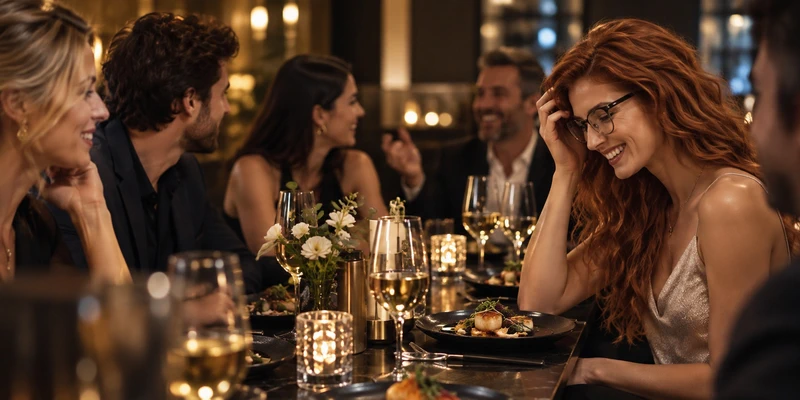
Look for events near your home or workplace so returning is realistic. Introduce yourself through the task, not through a rehearsed dating line. If you meet someone interesting, let the conversation develop over more than one interaction before making the event feel like a singles venue.
Volunteer Where the Work Matters to You
Philadelphia Parks & Recreation lists ways to support local parks, recreation centres, youth activities, sports, and service events. Park Friends groups and seasonal projects can turn a broad wish to help into a recurring local role.
Volunteering is not a dating tactic. Do the work, follow instructions, and speak with the whole group. Attraction may develop because people repeatedly see each other's character, but nobody owes attention in exchange for participation. This boundary is what keeps the environment comfortable.
Use the Schuylkill for Activity-Based Social Plans
Schuylkill Banks and the connected trail support running, cycling, walking, paddling, and public outdoor activities. Join an organized group appropriate to your pace rather than interrupting someone exercising alone. A recurring club makes names, schedules, and conversation familiar.
For a date, choose a short, populated section and add a clear endpoint such as coffee. Outdoor plans need a weather alternative. Mention the expected distance in advance so the other person can dress comfortably and decide whether the activity suits her.
University City Is Broader Than Student Dating
University City includes students, faculty, researchers, healthcare workers, nonprofit staff, founders, and residents with no university affiliation. Public lectures, cultural programs, continuing education, professional associations, and community events offer entry points without pretending to belong to a campus community you do not know.
Age and life stage matter. A graduate student, physician, and established administrator may share an area but not a schedule or dating goal. Ask about the person in front of you rather than assuming that location explains her priorities.
Fishtown and East Passyunk Need Different Approaches
Fishtown's music, visual arts, food, and independent-business scene can support conversation when you attend a specific performance, workshop, or opening. East Passyunk and nearby South Philadelphia neighborhoods offer community events, food traditions, small businesses, and local routines that often feel more residential.
In both areas, a purposeful event is better than wandering between venues. Tell a match exactly what you want to attend and why. Specificity makes the invitation easier to evaluate and shows that the plan was not sent to ten people.
Manayunk and Northwest Philadelphia Suit Consistent Routines
Manayunk can connect outdoor activity, neighborhood events, fitness, and small-business programs. Germantown, Mount Airy, and Chestnut Hill have their own civic, cultural, and community networks. These areas reward people who learn the local calendar rather than treating every district as an extension of Center City.
Travel time matters. If you live far away, do not promise weekly participation that you cannot sustain. A realistic routine close to home creates better opportunities than an attractive event that requires an exhausting commute.
Free Library Programs Make Conversation Easier
Library branches host talks, workshops, book groups, creative programs, and community services. They are useful for quieter people because attention begins with a subject instead of social performance. Select adult events related to a genuine interest and participate respectfully.
Do not turn a quiet reading room into an approach zone. Conversation belongs in the program, discussion period, or social space around the event. If you exchange contact details, keep the first follow-up connected to what you discussed.
Recreational Sports Reveal Compatibility Over Time
Social leagues, climbing groups, dance classes, tennis, pickleball, running clubs, and cycling groups create repeated contact and shared goals. Choose the right skill level and accept that teammates came to play, not to be evaluated as dates.
Good conduct is visible: arrive on time, help with equipment, encourage beginners, and handle competition calmly. When interest seems mutual, invite her to something outside the group so she can accept or decline without affecting the activity.
Professional Events Work When You Respect Their Purpose
Philadelphia's healthcare, education, technology, nonprofit, government, and creative sectors generate lectures, alumni events, conferences, and association meetings. These can expand a social circle, especially for newcomers whose colleagues are their only local contacts.
Lead with the event topic. Exchanging LinkedIn details is not automatic romantic permission, and a workplace-adjacent setting requires extra care. A personal invitation should come only after genuine rapport and should be easy to refuse.
How to Start a Conversation Without Forcing It
Use what is already happening: ask about the speaker, route, volunteer task, class, or neighborhood. Share your own answer instead of firing a sequence of questions. If she gives short replies, turns back to friends, or does not ask anything in return, end warmly.
A good interaction has reciprocity. Both people contribute, the topic develops, and staying in the conversation feels voluntary. You do not need to secure a phone number from every pleasant exchange.
Turn an Introduction into a Philadelphia First Date
Offer one activity, two possible times, and a public location. “Coffee near Rittenhouse on Thursday after work or Saturday afternoon?” is easier to answer than “We should hang out sometime.” If she proposes an alternative, that is useful engagement. If she repeatedly avoids a plan without offering one, step back.
Keep the first meeting short enough to feel safe and flexible. A cafe, museum program, market lunch, or well-used trail segment works better than an expensive dinner designed to create obligation.
Plan Around SEPTA, Parking, and Neighborhood Distance
Philadelphia looks compact on a map, but transfers, parking, weather, and event traffic affect arrival times. Pick a location reasonably convenient to both people. Confirm the exact entrance because large stations, parks, and cultural venues often have several meeting points.
Do not interpret a travel constraint as low interest. Someone may be enthusiastic but unable to cross the city on a weeknight. Offer a weekend option or alternate neighborhoods as the connection develops.
Dating Apps Should Lead to a Realistic Plan
Apps can bridge Philadelphia neighborhoods that would not otherwise share a social route. State where your week is based, name interests you actually practise, and be honest about the relationship your schedule can support. After a specific profile question, propose a meeting point that does not quietly assign one person a ninety-minute journey.
After several substantive exchanges, suggest a short call or public meeting. For broader tactics, read dating in the USA for men. A match is only an introduction; compatibility becomes clearer through consistent behaviour.
Safety and Boundaries Matter Online and Offline
Meet publicly, arrange your own transport, tell a friend where you are going, and avoid sending money or sensitive documents. Be cautious when someone refuses reasonable verification, changes important facts, creates financial emergencies, or pressures you to leave a platform immediately.
Review common dating chat red flags without treating normal privacy as guilt. Safety should be mutual and proportionate. Video can add context, but it is not proof of honesty or a substitute for time.
Philadelphia, New Jersey, New York, and DC Are Not One Market
Philadelphia has its own neighborhood scale, institutions, transit patterns, and pace. New Jersey is distributed across many towns and commuter corridors. New York requires tighter planning around distance and time, while Washington, DC often mixes local life with federal, nonprofit, and international networks.
Compare meeting women in New Jersey, New York social settings, and where to meet women in Washington, DC. Use comparison to choose a practical routine, not to rank women by city.
Common Mistakes Men Make in Philadelphia
- Treating nightlife districts as the only places where single people socialize.
- Joining a community group only to approach women and contributing nothing.
- Assuming friendly Philadelphia directness is automatic romantic interest.
- Choosing a date across the city without checking transit, parking, or timing.
- Keeping app conversations alive without proposing a safe, specific meeting.
- Taking one declined invitation as permission to keep negotiating.
The correction is simple: build a life you can sustain, notice reciprocity, and make one respectful invitation.
Questions About Meeting Women in Philadelphia
Where can you meet single women in Philadelphia?
Try recurring museum programs, neighborhood associations, library events, recreational sports, volunteer projects, running or cycling groups, public workshops, and community festivals. Choose activities you would genuinely attend even without a dating outcome.
Is Philadelphia good for dating after 30?
Yes, especially when you build a routine around work, culture, fitness, volunteering, or neighborhood life. Dating after 30 usually improves when invitations are specific and both people are clear about schedules and relationship goals.
Which Philadelphia neighborhoods are best for meeting people?
Center City, Fairmount, University City, Fishtown, East Passyunk, Manayunk, and parts of Northwest Philadelphia all offer different social settings. The best choice is the area you can revisit consistently, not the neighborhood with the loudest nightlife.
Are dating apps useful in Philadelphia?
They are useful for identifying mutual interest beyond your existing social circle. Move from messaging to a short call or a simple public date once conversation is balanced, and avoid maintaining vague chats for weeks.
What is a good first date in Philadelphia?
Choose one compact plan: coffee and a short walk, a museum visit, a market lunch, or a public riverfront activity. Confirm the exact meeting point, allow enough travel time, and keep the first date easy to extend or end.
How can a newcomer build a social circle in Philadelphia?
Join one recurring local activity and one occasional citywide event. Volunteer, attend library or museum programs, participate in recreational sports, and follow up with people you meet without treating every interaction as a romantic lead.
Build a Philadelphia Routine Before Chasing Results
Choose a Philadelphia base rather than an exhausting circuit. Volunteer with a park group you can reach, join a league whose season you can finish, or follow a programme at one museum or library branch. Add occasional citywide events only after the local routine is stable.
If someone begins saving you a seat, continuing the walk, or proposing another event, suggest a date nearby before multiplying the travel. A Reading Terminal lunch, museum-and-coffee plan, or short Schuylkill walk can reveal compatibility without consuming an entire evening.
Make the Philadelphia plan specific: one place, one manageable journey, and room to decide what follows.