Where to Meet Women in Gothenburg: Social Places That Work

Gothenburg reveals its social side gradually. A rainy tram ride, a packed café in Haga, or a walk beside the Göta älv may look sociable, but none of them automatically gives strangers permission to interrupt one another. Better introductions usually grow from doing something together: joining a choir or running group, helping at a neighbourhood event, taking a course, or returning to the same cultural programme until faces become familiar.
This page is specifically about finding social settings and becoming part of them. For communication style, asking someone out, first dates, and relationship expectations, use how to date in Gothenburg. The wider cultural picture belongs to dating in Sweden today.
Turn a promising chat into coffee, culture, or a waterfront plan that fits an ordinary Gothenburg week.
Why Meeting Women in Gothenburg Can Take Time
Gothenburg is often described as more relaxed than Stockholm, but relaxed does not mean that strangers welcome interruption. Swedish privacy still matters. Many relationships begin through friends, education, work, associations, recurring hobbies, or apps because those settings provide context before romantic interest is introduced.
The city is large enough to offer several social worlds yet compact enough for people to meet again. Trams connect neighbourhoods, and the cultural life around Majorna, Linné, Haga, the centre, and Hisingen creates overlapping routines. That helps when you choose two or three activities and attend consistently.
Your goal should be a wider social life, not a weekly hunt for a number. When an activity remains worthwhile even if no date comes from it, your behaviour becomes calmer and conversations feel less transactional.
Gothenburg Social Places: Choose Context Before Location
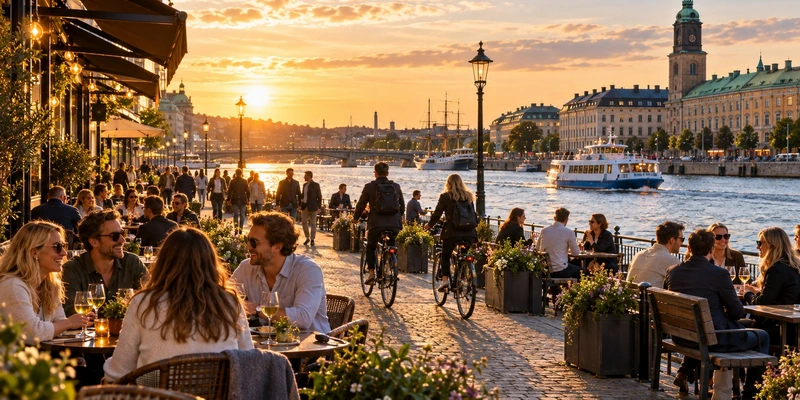
Gothenburg social places work differently depending on your personality. A loud venue may help an outgoing person but exhaust someone who communicates better through an activity. A library programme can produce deeper conversation, while a running group makes repeated contact easier without forcing immediate intimacy.
| If you prefer | Start with |
| Structured conversation | Courses, book groups, language cafés, public lectures |
| Movement and nature | Running, climbing, hiking, cycling, archipelago activities |
| Music and creative culture | Majorna, Stigberget, galleries, workshops, smaller concerts |
| International environments | Professional events, university programmes, language exchange |
| Community contribution | Volunteer organisations, neighbourhood projects, associations |
Check current organiser calendars before attending. Events, admission rules, and schedules change; a useful category is more durable than the name of one bar or weekly event.
1. Courses and Study Associations
Evening courses create repeated contact around a shared task. Swedish, photography, ceramics, cooking, dance, music, design, and practical workshops all give participants something specific to discuss. Choose a subject you would attend without a dating motive.
Conversation can remain simple: ask how someone approached the exercise, comment on the teacher's example, or continue a group discussion during the break. Familiarity develops naturally over several sessions, making a later invitation less abrupt.
Do not enrol in a women-dominated activity solely to pursue classmates. Participate, complete the work, speak with everyone, and respect that the group exists for learning.
2. Libraries, Book Groups, and Language Cafés
Gothenburg's public libraries offer more than quiet reading. Their programmes may include language cafés, book circles, workshops, talks, film discussions, and learning activities. These are useful for newcomers because conversation is part of the format rather than an interruption.
A language café should remain a place for practice and exchange. Talk with several participants, help without correcting every sentence, and avoid pressing someone for contact details during the first meeting. If rapport repeats, suggest continuing over fika after the session.
Consult the city's current library calendar because locations and dates change. A recurring programme near home is usually more valuable than a one-off event across the city.
3. Majorna and Stigberget Cultural Life
Majorna and Stigberget combine neighbourhood cafés, independent shops, restaurants, music, and cultural activity. The setting suits people who genuinely follow local music, design, food, or second-hand culture and want those interests to guide conversation.
Choose an announced event, workshop, exhibition, record-related gathering, or smaller performance instead of wandering through venues looking for women to approach. Context changes the interaction: discussing what just happened is easier and more respectful than evaluating someone's appearance.
Return to places that match your taste. Being recognized by organisers or other regulars gradually creates the social trust that a single busy night cannot provide.
4. Linné, Järntorget, and the Långgatorna
Linné stretches between busy streets, restaurants, cafés, cultural spaces, and the route toward Slottsskogen. Järntorget and the Långgatorna add evening energy and a broad mix of people. These areas offer opportunity, but noise and alcohol can make intentions difficult to read.
Prefer an event with a clear focus: a quiz, live performance, discussion, tasting, or friend-group gathering. If you begin a conversation in an ordinary café or bar, keep it situational and brief enough that the other person can return to her evening.
Never interpret friendliness from staff as romantic interest. They are working. Likewise, do not follow someone between venues or continue after short answers, turned-away body language, or a refusal.
5. Haga Cafés and Small Public Events
Haga is associated with fika, independent shops, and a walkable historic environment. It is more useful for a planned date or public event than for moving table to table. Crowds also include visitors, so being in Haga does not mean you are meeting local residents.
Look for markets, craft activities, exhibitions, or neighbourhood programmes where participants naturally pause and talk. A comment about an object, queue, or event is better than a generic compliment about appearance.
If a conversation becomes reciprocal, suggest something modest: another coffee, a short walk toward the moat, or exchanging contact details. One clear invitation is enough.
6. Slottsskogen and Recurring Outdoor Groups
Slottsskogen supports walking, running, outdoor recreation, picnics, and seasonal events. The park itself is not permission to interrupt women who are exercising or relaxing alone. Its value comes through organised groups and repeated activities.
Join a running club, walking group, outdoor fitness class, nature activity, or community event with a published meeting point. Shared effort creates conversation before and after the activity, and attendance over time helps people assess one another without pressure.
Keep safety and pace in mind. Do not isolate someone from the group, insist on accompanying her home, or turn practical help into an expectation of attention.
7. Lindholmen and Professional Communities
Lindholmen and nearby parts of the riverfront bring together technology, education, business, and international professionals. Public lectures, industry meetups, conferences, alumni activities, and after-work events can expand a social circle when your interest in the subject is genuine.
Professional settings require stronger boundaries. Begin with the topic, not flirting. Do not corner a colleague, contact someone repeatedly through work channels, or create discomfort in a network she needs for her career.
If conversation continues naturally beyond the event, a neutral invitation for coffee is clearer than disguising a date as professional follow-up.
8. University Events Without Treating Campus as a Venue
The University of Gothenburg and Chalmers contribute public talks, research events, cultural programmes, student associations, and international activity. Attend events open to your actual status and interests. A campus is not a place for outsiders to approach students indiscriminately.
Students and researchers can use legitimate associations, alumni groups, subject societies, and organised exchanges. The strongest connections grow from repeated collaboration or discussion rather than a one-time interruption between classes.
Age and life-stage compatibility matter. A shared event does not remove differences in power, professional position, or expectations.
9. Volunteering and Local Associations
Volunteer work connects people through responsibility. Environmental projects, community support, cultural festivals, sports organisations, and neighbourhood initiatives may all create regular teamwork. Select a cause you can support reliably.
Do not use vulnerable beneficiaries or emotionally intense situations as dating opportunities. Build relationships with fellow volunteers gradually, follow the organisation's rules, and keep the purpose of the work first.
Reliability becomes visible in this setting. Arriving on time, completing tasks, and treating everyone respectfully communicates more than a rehearsed introduction.
10. Archipelago and Coastal Group Activities
The Gothenburg archipelago and coastal setting create options for organised walking, kayaking, sailing, photography, and nature excursions. Group activities are safer and more social than treating a ferry ride or isolated trail as a place to approach strangers.
Weather, transport, equipment, and experience level matter. Choose a suitable organised activity, carry what you need, and do not make someone responsible for your safety as a way to prolong contact.
Conversation often develops during waiting, breaks, or the return journey. Let it remain connected to the shared experience before proposing another meeting.
Which Gothenburg Area Fits Your Social Style?
| Area | Best social context | Watch for |
| Majorna and Stigberget | Music, independent culture, neighbourhood cafés | Attend for the programme, not random approaches |
| Linné and Järntorget | Events, restaurants, evening social life | Noise, alcohol, and unclear signals |
| Haga | Fika, markets, walks, public events | Many visitors and busy tourist periods |
| Lindholmen | Technology, education, professional events | Maintain workplace boundaries |
| Slottsskogen | Clubs, outdoor groups, seasonal programmes | Do not interrupt solitary exercise |
| City libraries | Language, books, workshops, learning | Participate before seeking personal contact |
Neighbourhood identity is useful for choosing a routine, not predicting personality. Women in every area have different goals, backgrounds, and comfort levels.
How to Start a Conversation Without Intruding
Use the shared situation. Ask about the course exercise, the speaker's argument, a route, a book under discussion, or the event that just ended. A situational opener gives the other person an easy way to answer without accepting romantic interest.
Look for reciprocity. Does she ask something back, remain engaged, introduce a new topic, or choose to continue after the practical question is answered? Short replies, headphones, closed posture, renewed attention to a phone or book, and physical distance mean the conversation should end.
If the exchange is mutual, make one simple invitation. The guide to saying hello respectfully offers additional examples without manipulative lines.
Seasonal Meeting Strategies in Gothenburg
Spring and summer bring longer evenings, outdoor events, park activities, waterfront movement, and trips toward the archipelago. These seasons increase casual social contact, but popular areas can also become crowded with tourists.
Autumn and winter favour courses, libraries, climbing, sports, volunteering, workshops, concerts, and planned fika. Wind and rain make vague outdoor plans unreliable, so offer a clear indoor alternative and confirm the meeting.
Do not postpone social life until summer. A weekly winter activity creates stronger familiarity than attending several unrelated festivals once the weather improves.
Use Dating Apps to Arrange a Gothenburg Meeting
An app can solve the ambiguity of whether someone is open to dating, but it should not become a substitute for meeting. After several balanced exchanges, suggest a public activity with a place, day, and manageable duration.
Fika, a museum, a central walk, or a casual event is easier to accept than an elaborate dinner. Offer two realistic times and leave room for her alternative. If replies remain vague without a counterproposal, do not continue pushing.
Keep money, private documents, passwords, BankID, and intimate media separate from early conversations. Review dating chat red flags before increasing trust.
What Usually Does Not Work in Gothenburg
- Interrupting women on trams, at isolated stops, or while they are walking quickly.
- Treating Haga, Avenyn, or Långgatorna as a list of targets rather than public spaces.
- Joining a course, volunteer project, or language café only to pursue participants.
- Assuming English fluency means someone wants to entertain a visitor.
- Using alcohol to ignore unclear signals or ask repeatedly after a refusal.
- Sending persistent work messages after meeting at a professional event.
- Maintaining weeks of app conversation without proposing a safe, specific date.
A refusal does not require negotiation. End the interaction politely and allow the person to continue her day.
When Gothenburg Is Not Your Only Dating Direction
Local and international dating do not need to be framed as opposing judgments about women. Some men prefer Gothenburg's nearby social life; others are open to relationships that begin farther away. The deciding factors should be compatibility, communication, and a realistic ability to meet.
Use the international dating guide for Swedish men for cross-border options. If a relationship becomes established across distance, the guide to long-distance relationships from Sweden covers scheduling, travel, trust, and future planning.
For another Swedish city comparison, see where to meet women in Stockholm. The useful difference is not which city has “better women,” but which environment fits the life you can participate in consistently.
Frequently Asked Questions About Meeting Women in Gothenburg
Where can you meet single women in Gothenburg?
Recurring courses, library events, language cafés, volunteer projects, sports groups, cultural programmes in Majorna and Stigberget, and public events around Linné, Haga, Lindholmen, and the city centre create more natural opportunities than approaching strangers without context.
Is Majorna a good area for meeting people in Gothenburg?
Yes. Majorna and nearby Stigberget have cafés, independent shops, music venues, cultural events, and a neighbourhood atmosphere. Choose an activity you genuinely enjoy and return regularly instead of treating the district as a place to collect contacts.
Can you approach a woman in a Gothenburg café?
A short situational comment can be appropriate when she is not working, wearing headphones, reading intently, or signalling that she wants privacy. Keep the interaction easy to leave and accept a brief response or refusal immediately.
Do dating apps work in Gothenburg?
Yes, but an app should lead to a specific, low-pressure meeting rather than weeks of vague chat. Suggest fika, a walk, a museum, or another public activity after several reciprocal exchanges.
Do you need to speak Swedish to meet women in Gothenburg?
English works in many social and professional settings, especially among students and international residents. Learning Swedish still improves participation in local groups and shows that you want a life in the city rather than only access to dates.
What is the best season for meeting people in Gothenburg?
Summer offers parks, festivals, waterfront activities, and longer evenings, while autumn and winter favour courses, libraries, cultural programmes, sports, and volunteer groups. A recurring routine works better than waiting for one ideal season.
Build a Gothenburg Routine People Can Join
A useful Gothenburg plan should survive bad weather and an ordinary workweek. It might be a Tuesday course in Majorna, a weekend running group in Slottsskogen, or a recurring volunteer shift rather than ten unrelated nights out. The right routine is one you would keep even if no date appeared immediately.
Over time, that routine shows more than a polished introduction can: whether you listen, arrive when promised, include quieter people, and handle differences comfortably. If one woman begins extending conversations or suggesting another activity, invite her for a concise coffee or walk connected to what you already share.
Become a familiar face in Gothenburg, then invite the person who keeps choosing the conversation.