Dating in Regional and Rural Australia: Smaller Towns, Real Options

Dating in regional and rural Australia works best when the plan fits your actual town, working week, and travel limits. A regional centre, a coastal community, and an isolated mining town do not offer the same social options. You may have fewer nearby matches than in a capital city, but a larger search radius is useful only if you could genuinely meet the people it reveals.
This guide focuses on regional dating in Australia: repeatable journeys, FIFO and shift work, local activities, privacy, and using online conversations without pretending distance disappears. For the national picture, read dating in Australia today.
How Regional Dating Differs from the Capitals
In a smaller community, the people you meet through an app may also know your colleagues, friends, or former partner. That can make an introduction feel less anonymous, although it does not mean everyone knows everything. A regional centre with several social settings can also feel very different from a town where most activities share the same participants.
A smaller pool does not automatically mean worse prospects. It does mean that highly specific age, lifestyle, location, and relationship preferences may leave fewer mutually compatible people nearby. Decide which preferences are essential and which are flexible without expecting someone else to change their life to fit your search.
The Australian "tyranny of distance" becomes practical rather than abstract when a coffee date requires a return drive, overnight accommodation, or time off work. The useful alternative to capital-city dating is not endless optimism; it is a plan you can repeat on an ordinary week.
The Distance Factor: Intercity, Interstate, and the Journey Home
Measure the journey door to door, not as a straight line on an app. Roads, public transport, weather, daylight, parking, and connections can change what a meeting requires. Someone in the same state may be harder to see regularly than someone across a state border. Confirm both starting points in general terms without exchanging home addresses.
For an illustrative example, a 90-minute journey each way plus a one-hour coffee takes four hours before delays or preparation. That is not a measured route or a recommended limit. Ask whether you can spare that time more than once, and whether the other person could share the travel fairly.
| Connection | What to check | A realistic next step |
|---|---|---|
| Nearby towns | Actual return journey, work commitments, and a public meeting point. | A short date that does not depend on staying overnight. |
| Regional centre to a capital | Connections, parking, last services, and travel outside your usual routine. | Plan around an independently worthwhile visit, with no obligation to meet. |
| Interstate | Total travel time, leave, accommodation, and repeat-visit costs. | Agree on a conversation routine before buying tickets. |
Meeting halfway is not always fair if one route has poor transport or no suitable public venue. Compare effort rather than kilometres alone. If a first meeting needs an overnight stay, arrange independent accommodation and transport; the distance must not create pressure to stay at a stranger's home.
FIFO, Shift Work, and Mining-Town Realities
Fly-in fly-out work can separate your home base, workplace, and dating location. Drive-in drive-out work and rotating shifts create their own constraints. State where you normally live and when you are actually available, rather than allowing a temporary work location to imply a local relationship.
Describe a roster pattern without publishing sensitive site details. For example, someone working two weeks away and one week home might agree to a short call during the away period and an unhurried meeting after returning. This is a planning example, not a standard FIFO schedule.
Do not book every home day as a date. Allow for rest, family responsibilities, and changes to travel. If the other person also works shifts, compare calendars before reading a declined invitation as lack of interest. A late-night message may simply arrive after your shift, not during a suitable conversation window for her.
Keep professional boundaries in small workplace communities. A job title, employer, or shared colleague is not proof of character. Avoid turning workplace contact lists or accommodation arrangements into dating resources, and respect a no without making future encounters uncomfortable.
Where People Actually Meet in Country Towns
Start with activities you would value even without meeting a partner. Local pubs, public markets, sports clubs, arts programmes, agricultural shows, adult classes, and community events can all provide social context. None is automatically a singles venue, and participation does not indicate romantic availability.
- Local pubs: choose a format you enjoy, such as a publicly advertised quiz or music session. Talk during a suitable pause, not over a performance or to someone trying to work.
- Sports and recreation clubs: participate consistently and respect membership and conduct rules. Social conversation can happen naturally without treating training as an opportunity to approach everyone.
- Show days and public agricultural events: ask about a shared exhibit or activity. Check current dates and admission through the organiser, rather than assuming an event runs every weekend.
- Classes and volunteering: join because you want to learn or contribute. Women's support spaces and services are not routes to dates.
- Farming communities: use genuine introductions and open community activities. Never visit private properties uninvited or seek personal information through a business relationship.
A simple question about something you are both doing works better than a generic pickup line. If the exchange becomes mutual, offer one low-pressure invitation. If the answer is brief or the person returns to friends, let the interaction end comfortably.
How Online Dating and Video Close the Distance
Choose Apps by Your Actual Area, Not a National Ranking
There is no demonstrated best dating app for every rural Australian town. Compare whether a service has relevant people in your practical meeting area, useful distance controls, clear intentions, transparent charges, and safety tools. Do not pay simply because a national popularity list suggests your local experience will improve.
Location features also need interpretation. Tinder explains why profiles can appear beyond a selected distance, while Bumble's Travel mode guidance describes changing the displayed location through a paid feature. A profile appearing near you is not proof that the person lives there.
Write a useful location statement: "Based outside a regional centre, happy to meet in town on a free Saturday." You can be honest about distance without publishing your address, workplace entrance, or exact daily movements.
Use Video Before Committing to a Long Journey
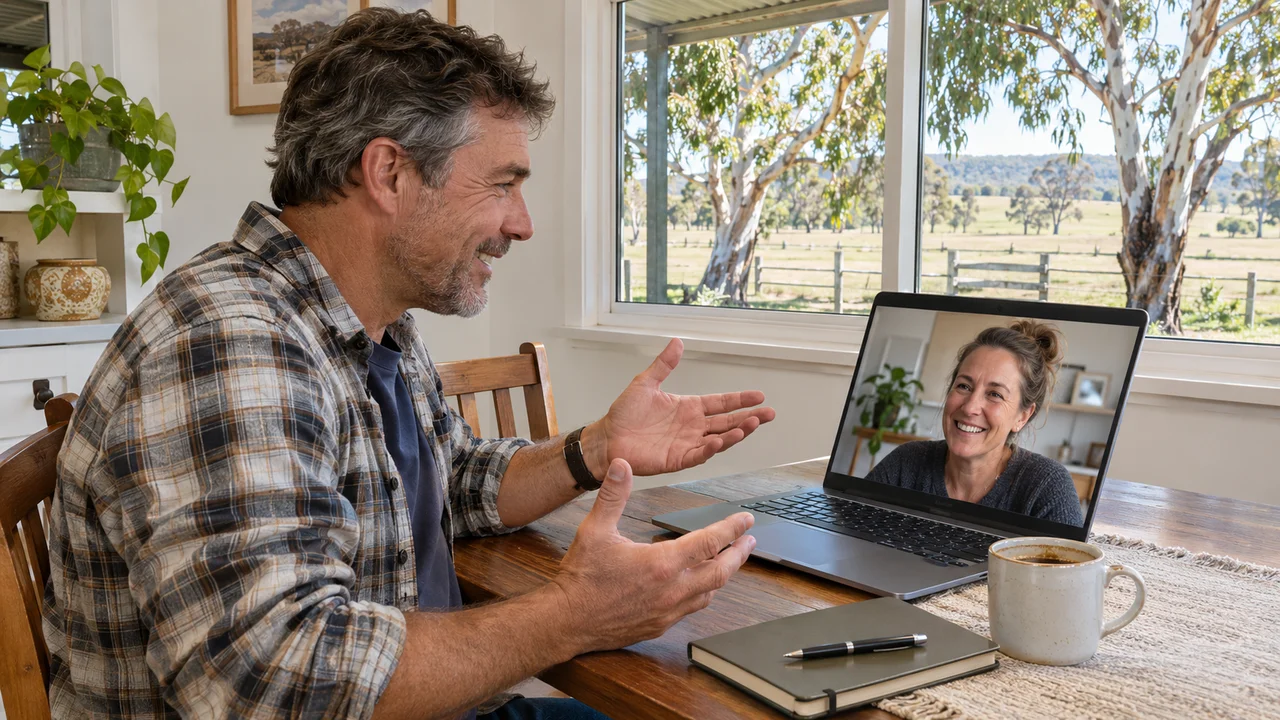
A short, mutually agreed call can show whether conversation feels comfortable before either person spends a day travelling. Offer a clear time, confirm both locations, and use a private setting where you can hear. If the connection drops, agree on a backup instead of repeatedly demanding that someone reconnect.
LadaDate offers international women's profiles and video dating, not a guaranteed inventory of women in your Australian town. Registration and communication charges are separate; check current service rates before using paid features. Video supports conversation but cannot independently prove identity, location, or honest intentions.
Privacy in a Small Community
You may recognise someone from a club, workplace, school network, or previous social circle. Keep their profile and messages private. Do not ask mutual acquaintances to investigate them, share screenshots for entertainment, or turn a declined invitation into community discussion.
Check what your own profile reveals through photos, uniforms, landmarks, and linked accounts. Australia's eSafety Commissioner recommends reviewing dating-service privacy and location settings. App controls may reduce exposure, but they cannot guarantee that nobody you know will recognise you.
Privacy is not the same as secrecy. You can tell a trusted person about a first meeting while keeping another person's private messages out of public discussion. If you encounter threats or harassment, keep relevant evidence, use reporting tools, and seek appropriate support.
Using the Nearest City as a Meeting Point
Many regional couples meet halfway in the nearest capital or large centre, where there are more public venues and better transport home. If that city is Brisbane, Perth, Adelaide or the Gold Coast, our local guides to Brisbane, Perth, Adelaide and the Gold Coast suggest specific places and times. Agree who travels, where each person stays and how you will both get home before you book anything.
For practical advice on the wider Australian market, read dating in Australia for men, and if a regular call is easier than a regular drive, see video chat dating in Australia.
When to Look Beyond Your Region
Widen your search when you genuinely accept the contact, travel, and possible future decisions involved, not because you expect women elsewhere to be easier to date. First consider whether another regional centre or a city you regularly visit would create a sustainable connection.
For an overseas relationship, start with international dating for Australian men. Her present city, language, work, and goals matter more than a country label. Living regionally does not remove the need to compare airports, domestic connections, and the cost of repeat visits.
If a connection becomes ongoing, use long-distance relationships for Australian men for contact routines and shared planning. The practical question is whether both people can participate fairly without giving up privacy, financial security, or their existing responsibilities.
Explore an international connection only if it fits the relationship you want.
Frequently Asked Questions
Is it harder to date in regional Australia?
It can be harder to find mutually compatible people within a convenient distance, but regional communities differ. Build a repeatable social routine and assess real journeys rather than assuming every small town offers the same experience.
What are the best dating apps for rural Australia?
There is no universal winner for every town. Compare relevant profiles in your practical meeting area, location controls, intentions, charges, and safety features before paying.
How can I meet someone in a small Australian town?
Try genuine introductions, open community events, sports or interest clubs, classes, and volunteering you value. Respect the purpose of each activity and do not assume participants are single.
How can I date as a FIFO worker?
Be clear about your home base, roster, and realistic availability. Agree on contact while away, allow time to rest after returning, and share planning rather than expecting a partner to fit every free day.
How far should I set my dating-app distance?
Use a distance you could actually travel repeatedly. Check door-to-door time and the return journey; a radius on a map does not account for roads, services, or shift commitments.
Can video calls help with regional dating?
Yes, they can help assess conversational comfort before a long journey. Calls should be voluntary and do not prove identity, residence, safety, or commitment.
How do I protect privacy when everyone knows each other?
Limit unnecessary location details, review privacy settings, and keep profiles and messages confidential. Tell a trusted person about a first meeting without sharing another person's private conversations publicly.
Should I consider international dating if I live in rural Australia?
Only if you are genuinely willing to manage time zones, language, repeat travel, and possible future residence decisions. International services do not guarantee local matches or a compatible partner.

 Start Live chat
 Send Message