Where to Meet Women in Bergen: Outdoor Life, Culture, and Community

Bergen puts mountains beside meeting rooms and rain beside ambitious outdoor plans. Its dating opportunities follow the same contrast: a hike, film discussion, library event, volunteer shift, concert, or neighbourhood activity can create closeness, but only when the setting is appropriate and the plan respects weather, ability, and privacy.
Bergen is large enough to offer variety but compact enough for social circles to overlap. That rewards consistency and good conduct. A man who returns to the same activity can become known through his behaviour, while someone chasing a different crowd every weekend remains a stranger. This guide focuses on repeatable settings, mutual interest, and realistic first dates.
Meet through Bergen interests, then choose a first plan that does not depend on perfect weather or borrowed courage.
Bergen Dating Grows Through Shared Routines
People often meet through friends, work, study, organised leisure, and associations. Privacy is generally respected, so an immediate personal approach without context may feel intrusive even when it is polite. A group gives both people time to observe one another without making every interaction a romantic test.
Give the calendar a weatherproof spine: perhaps a library or film programme that continues through winter, supported by an outdoor group when conditions cooperate. Bergen makes flexible planning more valuable than collecting a long list of fair-weather venues.
The City Centre Works Best Around a Real Event
Sentrum brings together workers, students, visitors, shoppers, and people attending performances. The concentration creates opportunities, but foot traffic alone is not permission to interrupt strangers. A concert, film screening, lecture, workshop, or scheduled social activity provides better context.
Arrive on time, participate, and speak about what is happening. If you meet someone interesting, keep the first exchange light. A later coffee invitation is often more comfortable than trying to turn a brief encounter into a full evening.
Bryggen Is Better for Dates Than Cold Approaches
Bryggen and the harbour are visible meeting points, but many people there are sightseeing, working, or moving through a crowded area. It is stronger as part of a planned date than as a place to approach women at random.
Combine a short walk with a museum, cultural event, or cafe. In busy seasons, agree on a precise landmark and allow extra time. Do not assume that a visitor wants company simply because she is taking photographs alone.
Nygårdshøyden Connects Learning and Culture
Nygårdshøyden and nearby university areas support lectures, student societies, museums, cultural programmes, language exchange, and public discussion. These settings can help newcomers meet people interested in ideas rather than nightlife alone.
Check whether an event is genuinely open to the public. Do not pretend to be a student or enter closed activities merely to meet women. A respectful public lecture or course offers enough shared material for a natural conversation.
Bergen Outdoor Groups Turn Activity into Familiarity
Walking, hiking, running, kayaking, skiing, and other outdoor interests are central to Bergen life. The useful dating opportunity is not the mountain itself but the organised group: people meet repeatedly, share responsibility, and talk while doing something they value.
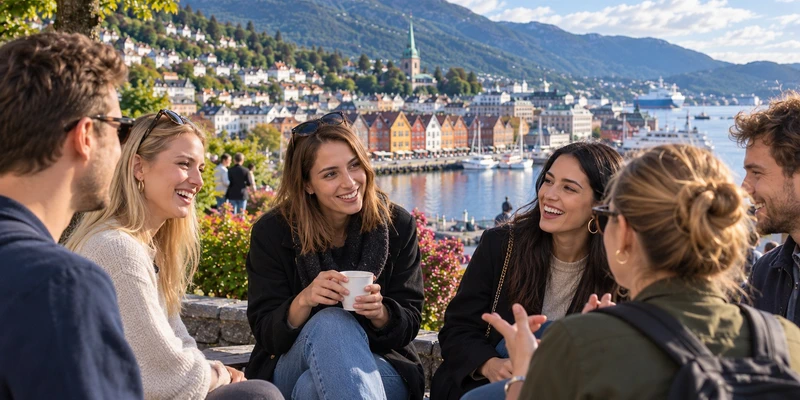
Choose a group matching your fitness and experience. State honestly if you are a beginner, carry the recommended equipment, and follow the leader's safety guidance. Competence and consideration make a better impression than trying to look fearless.
Fløyen Can Support a Simple Social Plan
Fløyen has accessible routes and is close to the centre, which makes it easier to use for an organised activity or later date. Even there, weather, light, surface conditions, and ability levels matter. A first meeting should stay on a clear, populated route with an agreed duration.
Offer an indoor backup before the day arrives. If the forecast changes, switching to coffee or a museum should feel like sensible planning, not failure. Avoid surprising someone with a longer climb than she accepted.
Save Vidden and Demanding Routes for Established Trust
The route between Ulriken and Fløyen can take several hours and requires appropriate conditions and preparation. It is not a low-pressure first date. Long or remote routes reduce flexibility and can create a safety concern for someone meeting you for the first time.
Build trust through public meetings first. Later, discuss pace, equipment, transport, food, weather limits, and the decision to turn back. Outdoor compatibility includes judgement, not only fitness.
Libraries Offer Structured, Low-Pressure Contact
Bergen Public Library lists adult events, reading groups, literary lunches, language cafes, learning support, films, and game activities across the main library and district branches. These formats are useful for people who prefer a subject-led conversation.
Attend the programme rather than treating a reading room as an approach zone. Speak during the social part, contribute to the discussion, and follow up on something specific. Quieter settings still require attention to personal space.
Voluntary Centres Open Local Networks
Bergen's frivilligsentraler and voluntary organisations support local activities and practical roles in different districts. Opportunities can involve culture, integration, environment, community events, companionship, or neighbourhood support.
Volunteer because the work matters to you. Complete the task, respect confidentiality, and cooperate with everyone. Romance is never the reward for service, but repeated contribution allows people to see reliability and values over time.
Music, Film, and Festivals Add Social Context
Bergen has a strong calendar of concerts, festivals, theatre, exhibitions, literature, and film. A programmed event gives strangers an immediate subject. Smaller screenings, discussions, workshops, and volunteer roles often support conversation better than a packed headline performance.
Ask what brought her to the event or which part she enjoyed. Include her friends if she is with a group. Do not talk through the performance or turn a polite answer into a prolonged interview.
Nordnes and Sandviken Reward Neighbourhood Awareness
Nordnes and Sandviken combine residential life, heritage, walking routes, community identity, and access to the centre. They are not themed dating districts. Local events, associations, and regular activities are more useful than walking the streets hoping to approach someone.
If you live nearby, learn the local calendar and contribute. If you are coming from elsewhere, have a genuine reason such as a scheduled programme or group activity. Residents notice the difference between participation and tourism.
Møhlenpris and Marineholmen Mix Study, Work, and Recreation
This part of Bergen brings together university life, offices, research, housing, parks, and waterfront activity. Public events, professional talks, sports, and community programmes can widen a circle beyond colleagues.
Do not assume a person's occupation or relationship goals based on the area. Ask about her actual interests and routine. A researcher, student, entrepreneur, and long-term resident can share the same venue for very different reasons.
Social Sport Shows Character Over Time
Running clubs, climbing, dance, football, swimming, racket sports, and recreational groups create repeat contact. Pick the right level and attend regularly. People notice whether you arrive prepared, support beginners, handle competition well, and respect the organiser.
If interest develops, make one invitation outside the group. Accept the answer and keep future sessions comfortable. Asking out several members of the same small group quickly can damage trust.
Language Cafes Are for Exchange, Not Targeting Foreigners
Language cafes can help newcomers practise Norwegian and residents practise other languages. They work because everyone expects conversation, but that does not turn participants into dating prospects by default.
Speak with different people, follow the format, and share your own learning goals. If one connection continues naturally across sessions, a coffee invitation may fit. Do not select women by nationality or use the group to pursue stereotypes.
How to Start a Conversation in Bergen
Use immediate context: the route, speaker, film, volunteer task, book, or class. Ask one open question and offer your own answer. Norwegian reserve varies by person, but giving space and avoiding exaggerated confidence are usually sensible.
Look for reciprocity. Does she ask something back, add detail, stay in the conversation, or suggest continuing it? If replies stay short or attention returns to friends, finish politely.
Turn Mutual Interest into a Bergen First Date
Suggest one public activity with two possible times. A central cafe, museum programme, film, or short walk with an indoor alternative is easy to evaluate. “Coffee near the main library Thursday after work or Saturday afternoon?” is clearer than “we should meet sometime.”
Keep the first date compact. A fjord excursion, isolated cabin, or long mountain day asks for too much trust and time. Save larger plans for a connection that has already shown consistency.
Rain Is a Planning Question, Not a Personality Test
Bergen weather changes plans. Check the forecast, communicate early, and offer a specific alternative. Do not pressure someone to prove she is outdoorsy by accepting poor conditions or unsuitable clothing.
A museum, library event, cinema, cafe, workshop, or indoor activity can preserve the date. Reliable adaptation is more attractive than complaining about the weather or cancelling without another suggestion.
Dating Apps Should Lead Beyond the Screen
Apps widen Bergen's overlapping circles, especially for people whose work or study keeps them inside familiar groups. Replace the empty claim that you love nature with useful detail: the route you can handle, the film programme you follow, or the indoor hobby that survives November. A specific profile question should lead toward a central, low-risk first meeting rather than an ambitious excursion.
After several substantive exchanges, propose a brief call or public meeting. The guide to dating in Norway today explains the national communication context. A match is only an introduction; trust develops through consistent behaviour.
Transport and Geography Affect Bergen Dates
The city centre may feel compact, but people can live along different Bybanen, bus, ferry, or driving routes. Rain, transfers, tunnels, and the last service can change what counts as convenient. Confirm the exact entrance and expected finish time.
Do not interpret every travel limitation as low interest. Alternate areas or choose a central meeting point. As a relationship develops, effort should become balanced rather than falling permanently on one person.
Safety Matters Online, in Town, and Outdoors
Meet publicly, arrange independent transport, and tell a friend the plan. Do not send money, identification documents, passwords, or intimate images under pressure. Be cautious when important facts change or urgent financial stories appear.
For outdoor plans, share the route, carry suitable equipment, and turn back when conditions require it. Consent and safety are mutual responsibilities. A friendly exchange, drink, or hike never creates romantic or physical obligation.
Bergen and Oslo Are Different Social Markets
Oslo has a larger population, more dispersed urban options, and a broader professional market. Bergen combines a smaller overlapping network with unusually accessible mountains, a concentrated cultural identity, and weather that rewards flexible planning.
Compare where to meet women in Oslo and how to date in Oslo. Use those differences to choose practical routines, not to make claims about every woman in either city.
Common Mistakes Men Make in Bergen
- Treating Bryggen, the Fish Market, or nightlife as automatic approach zones.
- Suggesting a demanding or isolated hike before enough trust exists.
- Joining a volunteer or language group only to pursue women.
- Assuming fluent English removes the value of learning Norwegian.
- Ignoring weather, transport, daylight, or different fitness levels.
- Continuing to negotiate after an invitation has been declined.
The better approach is consistent participation, honest competence, and one respectful invitation.
Questions About Meeting Women in Bergen
Where can you meet single women in Bergen?
Try organised hiking and walking groups, library events, volunteer centres, cultural programmes, social sport, public lectures, film or music events, and recurring neighbourhood activities. Shared participation creates better context than approaching people who are simply commuting or sightseeing.
Is hiking a good way to meet women in Bergen?
Organised groups can be, provided you choose the right difficulty and join for the activity itself. Do not follow or interrupt women hiking alone, and never propose a remote trail as a first date with someone you barely know.
Do you need Norwegian to date in Bergen?
English works in many university, international, cultural, and professional settings, but Norwegian gives you wider access to local associations and everyday conversation. Make an honest effort and ask which language the other person prefers.
Are dating apps useful in Bergen?
Yes. Bergen is active but smaller than Oslo, so apps can expand your circle beyond work, university, and established friends. Move towards a public meeting when conversation is balanced instead of maintaining a vague chat.
What is a good first date in Bergen?
Choose a central cafe, museum event, short public walk, or compact cultural programme with an indoor alternative. Confirm the exact meeting point, check the forecast, and keep an exposed or demanding mountain route for later.
How can a newcomer build a social circle in Bergen?
Join one recurring activity through a volunteer centre, library, sports group, cultural organisation, or hiking club. Attend consistently, speak with the whole group, and contribute before expecting invitations or dates.
Build a Bergen Routine You Can Keep
Create a Bergen routine with a weatherproof core. An indoor cultural or volunteer programme can continue through dark months, while an outdoor group adds seasonal variety and shows whether you plan responsibly. Do not build the entire social strategy around a route that disappears when conditions turn poor.
If a connection develops, begin below the mountain rather than testing it with an isolated full-day trip. Choose a central café, short waterfront walk, public exhibition, or easy Fløyen plan with separate transport and a clear indoor alternative.
Choose the Bergen connection that matches your pace, then begin with a central plan before attempting the summit.