Video Chat with Eastern European Women from Canada

Video chat with Eastern European women from Canada is the practical stage between an interesting online exchange and a costly transatlantic meeting. Messages can show effort and shared interests, but a live call adds voice, timing, spontaneous reactions, and the way two people handle an imperfect moment. It helps both sides decide whether the connection deserves more time without pretending that one call proves a relationship.
The distance from Halifax, Montreal, Toronto, Calgary, or Vancouver changes the experience. A workable hour in Ontario may be awkward in British Columbia, and an evening in Warsaw or Bucharest may fall during a Canadian workday. Language, seasonal clock changes, travel routes, and current local conditions also matter. The goal is therefore not simply to switch on a camera. It is to build a repeatable way to communicate.
This guide owns that video-call stage. For culture, countries, and compatibility, begin with Eastern European women for Canadian men. For profiles, first messages, and the complete online search process, use how to meet Eastern European women online from Canada. If your connection is specifically Ukrainian, the more focused guide to video chat with Ukrainian women from Canada covers that route.
Why Video Matters in a Canada-Eastern Europe Relationship
Canada and Eastern Europe are far enough apart that misunderstandings become expensive. A person may invest weeks in messages, build an imagined version of the other, and discuss travel before hearing how everyday conversation actually feels. Video reduces that gap. It lets you notice whether questions are reciprocal, whether humour survives outside edited text, and whether both people can manage a difference in language or pace with patience.
A useful call is not an audition. Camera angle, lighting, accent, nerves, and an unfamiliar platform can make anyone less polished than in photographs. Look for presence and consistency instead: does she remember earlier topics, answer naturally, ask about your life, respect the agreed time, and communicate when plans change? You should offer the same reliability.
Video also creates a healthier boundary around travel. Canada-to-Europe flights, accommodation, time away from work, insurance, and local transport can be significant. Several calm calls provide better evidence for a trip than romantic intensity in text. They do not eliminate risk, but they make the decision less speculative.
Suggest the First Call After Mutual Interest Appears
Do not demand a call in the first message as proof that a woman is real. A stranger may reasonably protect her privacy, especially if she receives many generic invitations. First build enough context that the video conversation has somewhere to go. Refer to details in her profile, answer her questions, share ordinary facts about your own week, and notice whether effort is mutual.
When the exchange has become comfortable, make a low-pressure invitation. A useful message might say: “I have enjoyed talking about our cities and weekend routines. Would you be comfortable with a short video call next week? I can do Tuesday at 12:30 p.m. Toronto / 7:30 p.m. Bucharest, or Saturday one hour earlier.” Writing both cities and both local times is considerate and removes ambiguity.
Offer two or three options rather than asking her to solve the schedule alone. Make it clear that rescheduling is normal. If she prefers a voice call first, that can be a reasonable intermediate step. The point is gradual comfort, not instant access.
Canada-Eastern Europe Time Zones Need City-Level Planning
“Canada time” and “Eastern Europe time” are too vague. Canada spans multiple time zones, while Eastern European destinations may follow different seasonal changes. For several weeks each year, the usual difference can shift because Canada and Europe do not always change clocks on the same date. Recheck the cities before every important call rather than relying on memory.

| Canadian location | Usually practical Canadian window | Typical Eastern European side | Planning note |
|---|---|---|---|
| Halifax and Atlantic Canada | Late morning to early afternoon | Late afternoon to evening | The smaller time gap often permits a call before the Canadian workday ends. |
| Montreal, Ottawa, and Toronto | Late morning or around lunch | Early to mid-evening | Weekends are useful when weekday lunch breaks feel rushed. |
| Winnipeg and Central Canada | Morning to late morning | Late afternoon to evening | Write both dates when a call moves close to midnight in Europe. |
| Calgary and Edmonton | Early to mid-morning | Late afternoon or early evening | Alternate inconvenience instead of making one person wake early every time. |
| Vancouver and Pacific Canada | Early morning | Late afternoon | A Canadian evening usually lands very late or the next morning in Europe. |
These are planning patterns, not permanent conversions. Confirm the exact cities with a reliable world clock. Then put the appointment in writing with the day, date, time, and zone on both sides. “Saturday, 9:00 a.m. Vancouver / Saturday, 7:00 p.m. Kyiv” is much safer than “Saturday morning.”
Fairness matters over time. If a Vancouver man always calls before breakfast while his partner receives a comfortable evening slot, resentment can grow. Alternate early and late windows when possible, or choose weekends so neither person sacrifices sleep or work.
Eastern Europe Is a Region, Not One Video-Dating Culture
Women in Ukraine, Poland, Romania, Czechia, Bulgaria, Hungary, Slovakia, Moldova, and the Baltic countries do not share one personality or one relationship script. City, family history, age, education, work, previous relationships, language, and individual temperament usually explain more than nationality alone.
A Polish professional in Warsaw may have a different schedule and communication style from a Romanian entrepreneur in Cluj, a Ukrainian teacher living temporarily abroad, or a Czech woman in Brno. Avoid testing a person against claims such as “Eastern European women are always traditional” or “Slavic women expect men to lead.” Ask what partnership, family, work, independence, and relocation mean to her.
Geographic precision also supports better travel planning. Romania and Hungary belong to the region but are not Slavic countries. The Baltic states have their own languages and histories. Ukraine-specific conditions may affect location, electricity, mobility, and travel. A respectful Canadian man learns the actual context rather than using “Eastern European” as a substitute for curiosity.
Prepare the First Video Date Without Overproducing It
Choose a quiet, private place with a stable connection. Put the camera near eye level, face a soft light, close work notifications, and test the microphone. Wear what you would choose for a relaxed daytime date. A clean background and full attention matter more than expensive equipment.
Keep text chat available in case an address, city name, or unfamiliar word is hard to hear. Charge the device and have a backup connection if possible. At the same time, do not record or take screenshots without explicit consent. Privacy applies equally to both people.
Prepare three topics from your earlier messages and one or two questions about daily life. Do not write a script with twenty interview questions. The best preparation makes spontaneous conversation easier; it does not remove spontaneity.
A Simple Structure for a 30-Minute First Call
First Five Minutes: Make the Call Comfortable
Confirm that sound and video work, acknowledge that a first call can feel slightly awkward, and begin with something familiar from your messages. A comment about her week, a book, a meal, or the weather in both cities is more natural than a dramatic compliment.
Middle of the Call: Compare Real Life
Talk about work rhythms, weekends, friends, family contact, neighbourhoods, food, travel, and what a normal relationship would look like. Share your own answers. Mutual disclosure distinguishes a date from an interrogation.
Final Minutes: Agree on One Next Step
If the conversation felt comfortable, say so plainly and suggest another call or a return to messages. If either person is tired, end on time. A respectful conclusion makes a second conversation more likely than stretching the first call until it loses energy.
Manage English, French, and Translation with Patience
Some Canadian men communicate mainly in English; others are more comfortable in French or use both. An Eastern European partner may speak English as a second or third language, know some French, or depend on translation for complex subjects. Fluency should not be confused with intelligence, honesty, warmth, or compatibility.
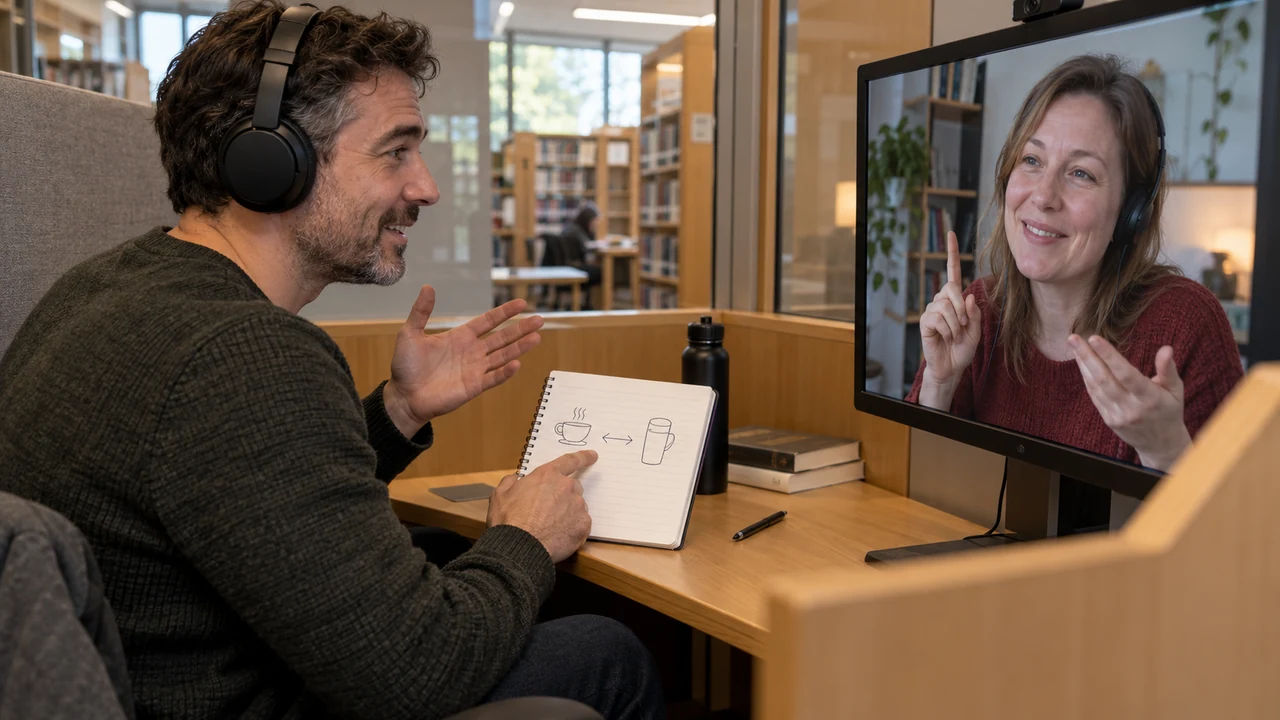
Speak clearly but not unnaturally slowly. Use shorter sentences, reduce regional slang, and pause long enough for a complete answer. If a phrase causes confusion, reword it instead of repeating the same words louder. Names, dates, places, and plans can be typed in chat.
Automatic translation helps with individual words, but humour, sarcasm, affection, and sensitive relationship terms can shift in translation. For important subjects, ask each person to explain what they understood. The guide to video dating language-barrier tips provides a deeper method for clarification without embarrassment.
A language gap can improve when both people contribute. You might learn a few greetings in her language while she practices English or French. Do not turn every call into a lesson, correct every mistake, or use fluency as a power advantage.
What to Discuss with an Eastern European Woman on Video
Start with subjects that reveal ordinary compatibility rather than demanding declarations. Useful areas include:
- what a normal weekday and weekend look like in each city;
- how often each person prefers messages, voice notes, and video calls;
- work responsibilities and realistic availability;
- family contact, friendships, and personal boundaries;
- travel experience and comfort with international relationships;
- languages each person uses and how misunderstandings should be handled;
- relationship goals without demanding a premature promise;
- what both people would need before considering a first meeting.
Ask follow-up questions that grow from her answers. “What do you like about living there?” is better than cycling through unrelated prompts. Share equivalent information about Canada so that the exchange remains balanced. For a focused list of conversational routes, read what to talk about on a first video date.
Avoid questions about income, sexual history, immigration, marriage deadlines, or political identity before trust supports them. Current events may affect her directly, especially if she is Ukrainian or displaced. Let her choose how much to discuss, and listen without turning her experience into a debate.
Read Behaviour Across Several Calls
One nervous conversation is weak evidence. Look for a pattern. Positive signs include keeping or responsibly rescheduling calls, remembering shared topics, asking questions, introducing realistic details about daily life, respecting boundaries, and making room for your schedule. Compatibility appears in repeated behaviour, not camera charisma.
Possible concerns include stories that repeatedly change, a camera that is always unavailable without a workable alternative, immediate exclusivity, pressure to leave a moderated platform, secrecy that never decreases, or requests for money, gifts, documents, tickets, medical expenses, or emergency help. A single technical problem is normal. A pattern of urgency plus inconsistency is not.
Video can show that a live person resembles a profile and can continue a conversation. It cannot prove legal identity, relationship status, exact location, finances, or long-term intent. Keep verification proportional and reciprocal. Do not ask her to expose private documents on camera, and do not send yours casually.
Build a Sustainable Call Routine from Canada
A long-distance connection becomes credible when communication fits real life. One or two planned calls each week may be more useful than daily demands. Messages and voice notes can carry the connection between calls without forcing either person to remain available across the time difference.
Agree on what happens when work, children, family, travel, or connectivity interrupts a plan. A short rescheduling message is a sign of respect. Repeated punishment for unavailable time is not romance; it is pressure. Protect sleep and employment from the beginning because an unsustainable routine will not improve after the relationship becomes serious.
After each call, notice whether the next step feels mutual. The article on what to do after a first video date explains follow-up messages, signs of interest, a second call, and respectful closure when the match is not right.
Budget and Travel Should Follow Evidence
Before discussing tickets, estimate the trip in Canadian dollars. Include flights, baggage, accommodation, local transport, meals, insurance, mobile data, and a contingency fund. Prices and routes change, so use current airline and official travel information rather than numbers copied from an old dating article.
The relationship should not depend on one person financing the other's emergencies. Keep bookings and money under your control. Do not send funds for visas, rent, medical treatment, family crises, phones, or tickets merely because video contact feels emotionally convincing. A visible face does not remove financial risk.
Current conditions may make her home city inconvenient or unsafe for a meeting. A neutral city can be sensible when both people independently understand entry rules, costs, and transport. Never pressure someone to return to a risky location for your convenience.
Move from Video to a Safe First Meeting
A trip becomes reasonable when several calls have been consistent, both people can discuss practical subjects without avoidance, intentions are compatible, and planning effort is reciprocal. The first meeting should confirm the relationship in ordinary life, not serve as a proposal, relocation decision, or financial rescue mission.

Meet first in a public place, keep independent accommodation and transport, and share the itinerary with a trusted person. Carry your own documents and payment methods. Plan enough free time to see how conversation works outside a scheduled call, but keep the first day light and flexible.
The guide to the first trip to meet a foreign girlfriend from Canada covers the transition from online trust to travel. Review the international dating cost for Canadian men before promises or bookings create pressure.
Common Mistakes Canadian Men Should Avoid
- treating Eastern Europe as a single culture or assuming every woman is Slavic;
- asking for video immediately and interpreting privacy as guilt;
- writing only one time instead of both cities, dates, and local times;
- making the woman accept every inconvenient call window;
- confusing accent or imperfect English with lack of interest;
- turning the first call into an identity interview or immigration discussion;
- recording, photographing, or sharing a call without consent;
- planning an expensive trip after one emotionally intense conversation;
- sending money because live video created a false sense of certainty;
- ignoring official travel advice and current local conditions.
The strongest approach is calm and specific: learn about one woman, use video as one verification layer, share inconvenient scheduling, and let repeated actions justify each next step.
Frequently Asked Questions
How can Canadian men start video chat with Eastern European women?
Build mutual interest through several personal messages, then suggest a short call with two or three options written in both local times. Keep the invitation easy to accept or reschedule.
What is the best time for video chat between Canada and Eastern Europe?
A Canadian late morning or early afternoon often matches an Eastern European evening. Atlantic Canada has easier overlap than Alberta or British Columbia, so calculate the exact cities.
How long should a first international video date last?
Twenty to thirty minutes is usually enough. Continue longer only when both people are comfortable and neither is sacrificing sleep, work, or family responsibilities.
Which Eastern European countries should Canadian men consider?
Ukraine, Poland, Romania, Czechia, Bulgaria, Hungary, Slovakia, Moldova, and the Baltic countries are distinct possibilities. Choose by the person, language, travel reality, and shared goals rather than a regional stereotype.
How should couples handle a language barrier on video?
Use plain sentences, reduce slang, pause for answers, type names or dates, and restate important decisions. Translation should support direct understanding, not replace it.
Can video chat verify an Eastern European dating profile?
It can connect a live person with photos, voice, and earlier messages, but it cannot prove every identity fact or intention. Look for consistency over several calls.
Is refusing a video call always a red flag?
No. Privacy, work, shared housing, language anxiety, and connectivity can be genuine reasons. Repeated avoidance combined with inconsistent stories or financial pressure deserves caution.
How often should Canadian men schedule video calls?
One or two dependable calls a week may be more sustainable than daily camera access. Build a rhythm that respects both time zones and both lives.
When should a Canadian man plan the first trip?
Travel after several consistent calls, clear mutual intentions, independent research, and a realistic CAD budget. Retain control of bookings, documents, accommodation, and money.
Should a Canadian man focus only on Ukrainian women?
No. Ukraine may be one meaningful direction, but Poland, Romania, Czechia, Bulgaria, Hungary, and other countries have distinct dating contexts. Follow the individual connection.
Final Thoughts
Video chat with Eastern European women from Canada works best as a bridge between online interest and informed action. It should clarify voice, routine, language comfort, boundaries, trust, and relationship goals before distance demands a major commitment.
Plan by city rather than country, write both local times, respect privacy, avoid regional stereotypes, and judge consistency across several calls. When the connection remains reciprocal and realistic, video can lead naturally to careful travel. When it does not, the same process helps both people step back before investing more time or money.

 Start Live chat
 Send Message