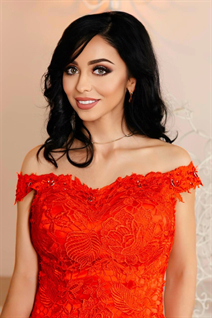
Slavic Women for Austrian Men: Building a Relationship Between Two Homes

A conversation about dating Slavic women can become much more useful when an Austrian man stops thinking about a distant region and asks where this particular woman feels at home. She might live in Vienna, work in another European city, or divide her time between places. Her roots matter, but they do not tell you whether a relationship would be local, long-distance, or somewhere in between.
Slavic women for Austrian men is therefore a question of individual compatibility: the language you use together, the family customs you want to keep, and the everyday life each person is prepared to share. This guide focuses on those decisions. It does not rank countries or treat a cultural background as a promise of a certain kind of wife.
To move from reading to a real conversation, browse Slavic women's profiles, check current locations, and look for an interest you could discuss sincerely. For a wider choice of dating directions, use international dating for Austrian men.
Slavic Roots Are Not a Relationship Address
The distinction matters in Austria, where your potential partner's place of birth may tell you very little about her present routine. Someone with Czech or Serbian roots might have built her adult life in the same city as you. Someone you meet nearby might still have important commitments in another country.
Ask "Where do you spend most of your time now?" before discussing travel or a future move. Follow with something human: "What makes that place feel like home?" This gives her room to describe work, friends, family, or personal choice without reducing the answer to a passport.
If you already live close enough to meet, let the relationship develop through ordinary dates. There is no need to introduce immigration, rescue, or cross-border planning into a conversation that is really about whether two people enjoy each other's company.
West, South, and East Slavic: Useful Distinctions, Not Dating Types
The Cambridge introduction to the Slavic languages distinguishes West, South, and East Slavic groups. Polish, Czech, and Slovak are West Slavic examples; Slovenian, Croatian, Serbian, and Bulgarian are South Slavic examples; Ukrainian, Belarusian, and Russian are East Slavic examples. Shared linguistic roots do not make these languages interchangeable.
For an Austrian reader, that distinction prevents a common geographical shortcut. Slovenia and Slovakia are different countries with different languages. Hungarian and Romanian are not Slavic languages, even though those countries may appear in the same broad European dating discussion. Baltic location is not itself a Slavic identity either.
Let a woman describe her own background, including mixed heritage or a preferred identity that does not fit a simple category. Ask which language she grew up speaking and which she uses now. Do not decide that a familiar surname, accent, or appearance supplies the answer.
German Can Help You Communicate Without Becoming a Test
It is practical to establish a shared language early, but fluency should not become an audition for living in Austria. A woman may be comfortable discussing her job in German and prefer another language for humour or emotional detail. You might also understand far less of her first language than you initially expect.
Explain local expressions rather than teasing her for missing them. If you use an Austrian dialect with friends, include her in the conversation by slowing down or rephrasing when needed. That is hospitality, not a demand that everyone speak identically.
Reciprocity matters: learn how to pronounce her name, ask about a useful everyday phrase, and allow her to correct you. You do not need to perform cultural expertise. Being able to say "I did not understand that; could you explain?" is more valuable than pretending related languages are all the same.
Ask What Family Closeness Looks Like in Her Week
Instead of asking whether she is family-oriented, ask what she actually does with family. Does she call a parent most evenings, spend holidays with siblings, support an older relative, or prefer more distance? Ask yourself the same questions. An Austrian family can also be closely involved, and neither person's habits should be treated as the neutral default.
Family affection and decision-making authority are different things. She can value a parent's opinion while making her own choices. You can welcome relatives without agreeing that every private disagreement needs to become a family discussion.
A useful question is "When something important happens, who do you usually talk to first?" Later, discuss which parts of your relationship remain private. The aim is not to loosen her family bonds; it is to make room for the couple alongside them.
Two Holiday Calendars Need a Shared Plan
Consider a hypothetical couple living in Vienna: he usually spends a particular holiday with his parents, while she wants time with relatives abroad. Neither plan is unreasonable. The difficulty begins when both people assume their established tradition will automatically continue unchanged.
Talk about which occasions matter personally, how much leave you each have, and whether some visits can happen separately. Alternating a holiday, hosting together, or choosing a different weekend may all be options. There is no single Slavic celebration schedule or Austrian solution that fits every family.
Start with meaning rather than logistics: "What would you miss most if we did something different this year?" That can reveal whether the important part is a religious practice, a meal, seeing a relative, or simply being included. Once you know that, a compromise becomes less abstract.
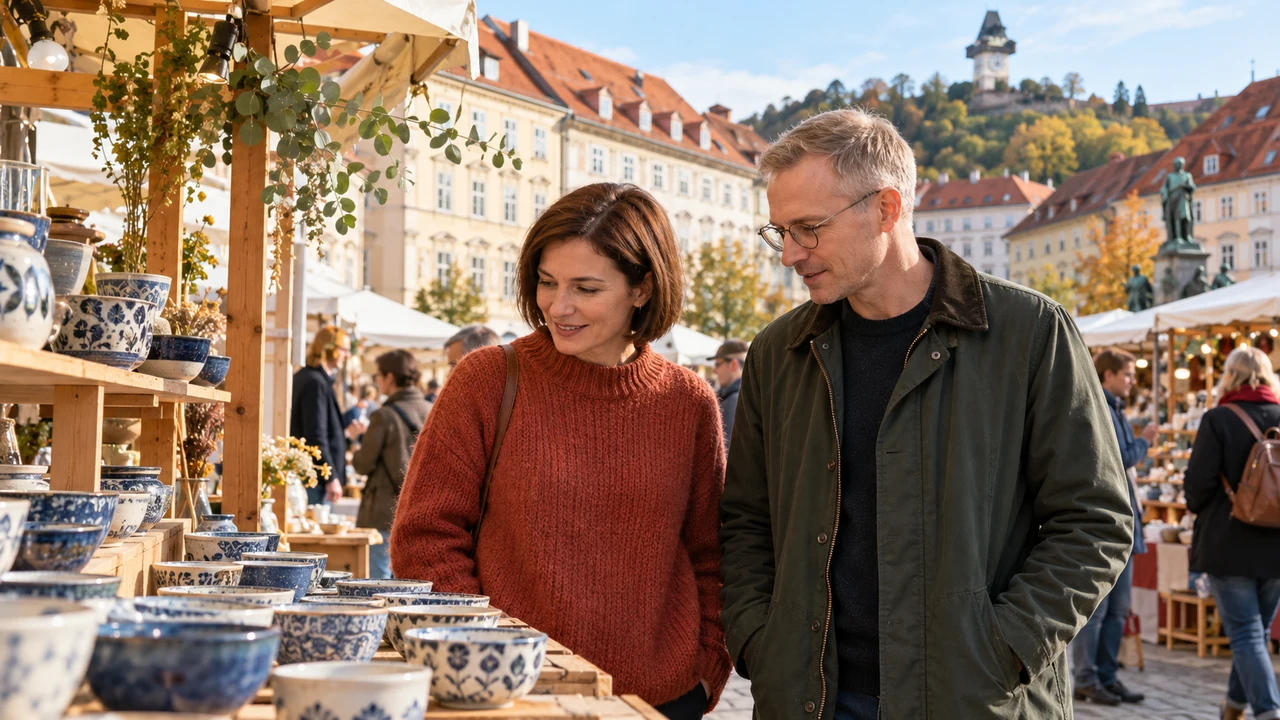
Austrian Slavic Relationship Compatibility in Everyday Decisions
A pleasant date can show attraction. Compatibility becomes clearer when you discuss ordinary choices without turning the conversation into an interview. Introduce one topic when it naturally arises, share your own view, and notice whether both people can ask questions.
| Everyday decision | A useful question | What to avoid assuming |
|---|---|---|
| Work and free time | What does a good week leave room for outside work? | That she will reduce her career ambitions to fit yours. |
| Household responsibilities | How would we divide routine tasks if we lived together? | That a traditional background assigns all domestic work to one person. |
| Money | What feels fair when incomes or travel expenses differ? | That equal amounts always mean equal effort. |
| Children and family | Which responsibilities must a partner understand? | That existing children or relatives will adapt without discussion. |
| Where to live | What would each of us gain and give up by changing home? | That Austria is automatically the agreed destination. |
Listen for specificity, not identical answers. Two people can prefer different routines and still negotiate well. A closer match on paper means little if one person dismisses the other's concerns. For costs involving travel or online communication, keep the detailed calculations in the Austrian international dating budget guide.
Romance Does Not Require a Fixed Gender Script
Taking initiative, choosing a thoughtful activity, and offering to pay can be kind gestures. They become uncomfortable when they are used to demand obedience or reassurance. Ask what your partner likes rather than explaining what women from her background are supposed to appreciate.
The word traditional needs unpacking. It may refer to marriage, religious practice, hospitality, or a division of responsibilities. Two people can use the same word and mean different futures. Discuss the actual arrangement instead of treating the label as agreement.
Likewise, independence does not mean a lack of affection. A woman can enjoy romance while maintaining her income, friendships, and private time. Your task is to find a pattern that both people choose, not to prove that one country's relationship model is superior.
Begin with Her Interests, Not a National Comparison
A first message should give her something specific to answer. If her profile mentions photography, ask what she most enjoys photographing and mention a place you like. If she discusses cooking, ask about a dish she enjoys making rather than announcing that Slavic women are good cooks.
For example: "You mentioned enjoying small exhibitions. I like seeing work by local artists in Graz. What kind of exhibition would you choose for a relaxed afternoon?" Use your actual interests and city, not borrowed details designed to sound impressive.
When interest develops, a live video conversation can help you hear each other's humour and clarify meanings. It is not a cultural exam or complete proof of identity. If your connection is specifically Ukrainian, the Austrian-Ukrainian compatibility guide offers narrower context, while meeting Ukrainian women online from Austria covers the search and communication steps.
Keep Country Choices and Travel in Their Proper Place
If distance becomes relevant, compare the actual cities rather than assuming a Slavic connection is nearby. Use the country comparison for Austrian men for geographical choices and the first-trip guide from Austria once you have mutually agreed to meet.
For an established relationship, discuss how contact and visits fit both lives through the Austrian long-distance relationship guide. Do not let practical convenience replace affection, but do not expect affection to solve every practical issue either.
A shared future might be in Austria, elsewhere, or not yet decided. Treat both careers and family ties as real. You can be clear about your own limits without presenting your home as a reward she must earn.
FAQ: Dating Slavic Women from Austria
What should Austrian men know about dating Slavic women?
Slavic describes a broad cultural and linguistic background, not one personality or relationship style. Ask about her own language, current home, family habits, and intentions. A woman with Slavic roots may already live in Austria, so do not assume distance or relocation.
Which countries have Slavic languages?
Examples include Poland, Czechia, and Slovakia in the West Slavic group; Ukraine, Belarus, and Russia in the East Slavic group; and Slovenia, Croatia, Serbia, Bulgaria, and others in the South Slavic group. This linguistic grouping does not determine an individual's identity or dating expectations.
Are Romanian and Hungarian women Slavic?
Romanian and Hungarian are not Slavic languages. Those countries can appear in broader regional dating guides, but should not be included as examples of Slavic languages. Individual people may have mixed family backgrounds and describe their own identity differently.
Can I meet Slavic women who already live in Austria?
Possibly, but check actual profile locations and availability rather than assuming a platform has members in a particular city. Discuss where each person currently lives and what kind of relationship they want. Nationality and residence are separate questions.
Should we speak German or her first language?
Choose the language both people understand comfortably. German, English, or another shared language can work. Ask which language she prefers for personal conversations, and clarify important meanings instead of relying only on translation.
Do Slavic women want traditional marriages?
Some do, some do not, and people define traditional differently. Discuss work, household responsibilities, children, finances, and commitment individually. Family background is not consent to a predetermined role.
How can an Austrian man show genuine interest?
Refer to something she chose to share, ask an open question, and offer something specific about your own life. Respect her preferred name, language, time, and boundaries. Avoid national comparisons or suggesting that Austrian residence is your main attraction.
Should a Slavic partner eventually move to Austria?
That is a shared decision, not the default outcome. Compare careers, family responsibilities, language, and where both people would feel at home. If relocation becomes relevant, check current official requirements for the actual circumstances rather than making promises about residence or work.
Let cultural interest open a conversation, then let the individual relationship shape what happens next. A language family can provide context; only the two of you can decide what a shared home would mean.

 Start Live chat
 Send Message